
The Science Behind Oxygenated Race Fuels
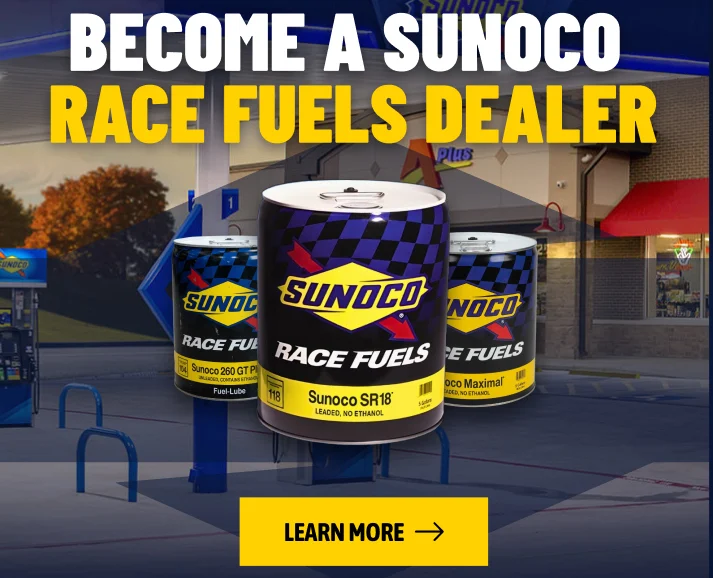
Becoming a Sunoco Race Fuels dealer starts with an inquiry through the Sunoco Race Fuels Become a Dealer page or the Sunoco Race Fuels contact page. Sunoco passes that information to the regional Sunoco Race Fuels distributor for the area, and the distributor works with the business to decide whether carrying race fuel is a good fit and, if it is, which fuels to stock and how to supply them. The businesses that fit best already serve people with high-compression, boosted, two-stroke, or seldom-used engines. That group includes gas stations and convenience stores near tracks, speed shops and tuners, powersports dealers, racetracks, marinas, and small engine shops.
Race fuel is a specialty product with a specific buyer. A location that sells it well knows what those buyers run and stores the product so it performs on race day the way it did when it left the blender. This guide explains how the Sunoco Race Fuels dealer program works, which kinds of businesses tend to be a strong match, what a location needs in place before the first pail arrives, and which Sunoco fuels line up with different customer bases.
What Is a Sunoco Race Fuels Dealer?
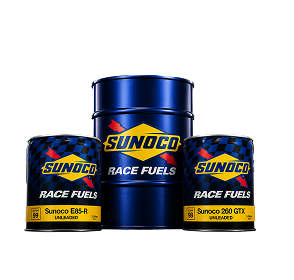
A Sunoco Race Fuels dealer is a business that buys Sunoco race fuel from its regional Sunoco Race Fuels distributor and resells it to racers and performance customers in its area. Sunoco Race Fuels are packaged in 5-gallon pails and 55-gallon drums, and those containers allow a business to sell high-octane fuel without installing the tanks and pumps a traditional fuel station uses. Sunoco's own guide to where to buy race fuel and how to store it makes the same point about how pails opened up the distribution network.
Racers locate Sunoco Race Fuels dealers with the Sunoco Race Fuels Fuel Finder, which lists each dealer's name, address, contact details, and the fuels it carries or can order.
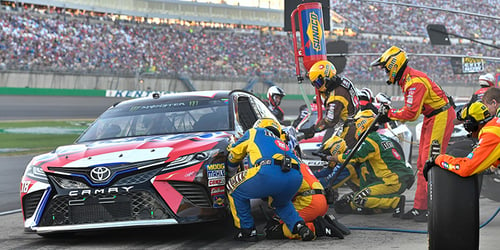
The brand behind the product carries weight with this audience. Sunoco has been the Official Fuel of NASCAR for more than twenty years, and Sunoco LP reports more than 18 million racing miles on its fuel without a reported fuel-related defect in its overview of why businesses choose Sunoco as a race fuel supplier. Each batch goes through a custom double distillation process built for batch-to-batch consistency, and Sunoco's history in motorsports fuel spans more than 50 years.
What Types of Businesses Make Good Sunoco Race Fuel Dealers?
The strongest Sunoco Race Fuels dealers are businesses whose existing customers already own engines that need high octane, long storage life, or ethanol-free fuel. Octane is a fuel's measured resistance to detonation, which is the uncontrolled ignition of the remaining air-fuel mixture after the spark plug fires. Detonation can crack pistons and hammer bearings in a high-compression or boosted engine, so a customer who knows their engine needs that protection buys fuel on a schedule. Sunoco's page on understanding octane ratings covers the testing behind the numbers.
Sunoco lists a customer base that reaches well past the racetrack. Owners of Corvettes, BMWs, and Porsches use race fuel, along with muscle car and street rod owners, collector car owners, motorcyclists, snowmobilers, high-performance boaters, and people running small engine equipment. Each business type below connects to one or more of those groups.
Gas Stations and Convenience Stores
Sunoco runs a race fuels cage program that lets a store sell packaged race fuel from a secured display, and Sunoco LP describes the program as requiring minimal time and floor space while delivering strong margins in its analysis of the advantage of offering race fuels at gas stations. A station near a drag strip or road course has a built-in audience, and so does a station on a route that performance car owners and riders travel often.
Stations that sell another brand of gasoline at the pump can carry Sunoco Race Fuels too. Sunoco states that some of its most successful race fuel locations sell traditional gasoline under other brands. At non-Sunoco stations, the race fuel can be marketed under the CAM2 or Turbo Blue names, and Sunoco offers specialty blends and private labeling under certain conditions.
Performance Shops, Engine Builders, and Tuners
A speed shop is often where a racer first learns which fuel an engine needs. When a tuner calibrates ignition timing and fuel delivery around one specific fuel, the customer has to keep running that fuel for the tune to stay safe. Keeping it on the shop's shelf gives the customer a dependable source and keeps fuel decisions with the people who built the combination.
The Sunoco catalog lists Sunoco Evo 10, a 105 octane unleaded fuel, for modern engines with oxygen sensors, and it lists Sunoco E85-R for nitrous, supercharged, and turbocharged applications. Shops building carbureted race engines have leaded options such as Sunoco Standard, a 110 octane leaded fuel, which the catalog lists for drag racing, oval track, road course, and muscle and vintage cars.
Motorcycle, Powersports, and Snowmobile Dealers
Dirt bikes, ATVs, sport bikes, and snowmobiles have their own fuel needs, and riders tend to buy fuel where they buy parts and service. Sunoco Moto RP6 is a 98 octane unleaded fuel with 15% ethanol, listed for off-road and road course motorcycle racing as well as ATVs. It comes without two-stroke oil mixed in, so riders add the oil they already use. Sunoco's guides to which race fuels work best for powersports and the best race fuel for snowmobiles give a dealer's staff a solid reference for customer questions.
Racetracks, Drag Strips, and Kart Tracks
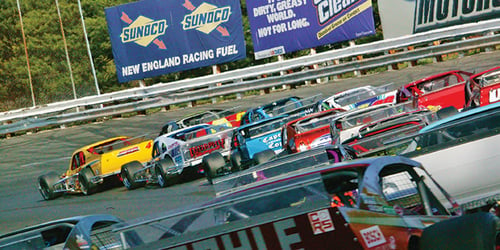
Tracks see concentrated demand on event days from racers who need fuel on site. When Sunoco's Fuel Finder was used to search the Daytona Beach area, the closest result was Daytona International Speedway, a sign of how naturally tracks fit the dealer network. Some sanctioning bodies limit or ban oxygenates, which are oxygen-containing compounds such as ethanol, in certain classes. For those classes the catalog points to Sunoco 260 GTX, a 98 octane unleaded fuel with no ethanol, and track operators can match their inventory to the rulebooks their classes follow.
Marinas, Small Engine Shops, and Outdoor Power Equipment Dealers
Seasonal and occasional-use engines suffer most from fuel that sits. Sunoco Optima is a 95 octane, ethanol-free fuel listed for boats, lawn equipment, small engines, and snowmobiles. Sunoco states that gasoline stabilizers are not needed with Optima and that its shelf life exceeds three years in airtight, opaque containers. That storage life gives marinas and outdoor power equipment dealers a straightforward product to sell alongside winterization and tune-up work.
Classic, Collector, and Muscle Car Businesses
Restoration shops and collector car storage businesses serve owners whose vehicles may sit for months between drives. Sunoco Surge is a 105 octane leaded fuel with a stated shelf life of three years when stored properly, and the catalog lists it for muscle and vintage cars. Sunoco's guide on storing vintage, collector, and muscle cars without fuel issues covers the storage side these customers ask about.

How Does the Sunoco Race Fuels Dealer Program Work?
The Sunoco Race Fuels dealer program runs through Sunoco's network of regional distributors. A business submits its information through the Become a Dealer page, and Sunoco passes it to the distributor that covers that area. The distributor then reviews the location and its customer base with the business to determine whether it is a good fit. When it is, the distributor and the business settle on a fuel lineup, display, and supply arrangement, and specifics such as pricing and order quantities are worked out between them.
A business preparing to apply can work through these steps in order:
- Search the Fuel Finder for existing dealers near the location, including fuel-specific searches such as dealers carrying Sunoco Standard, to see which fuels racers in the area can already buy locally.
- Compare the Sunoco Race Fuels catalog against the engines current customers run, using its application filters for categories such as drag racing, karts, snowmobiles, and modern engines with oxygen sensors.
- Submit an inquiry through the Become a Dealer page with details about the business and the racing activity near it, then expect to hear from the regional distributor that serves the area.
- Plan storage and display, such as a cage at a convenience store or a flammable storage cabinet in a shop.
- Train staff on the fuels the location will carry and put Sunoco's marketing and point-of-purchase materials in place.
What Support Does Sunoco Give Its Dealers?
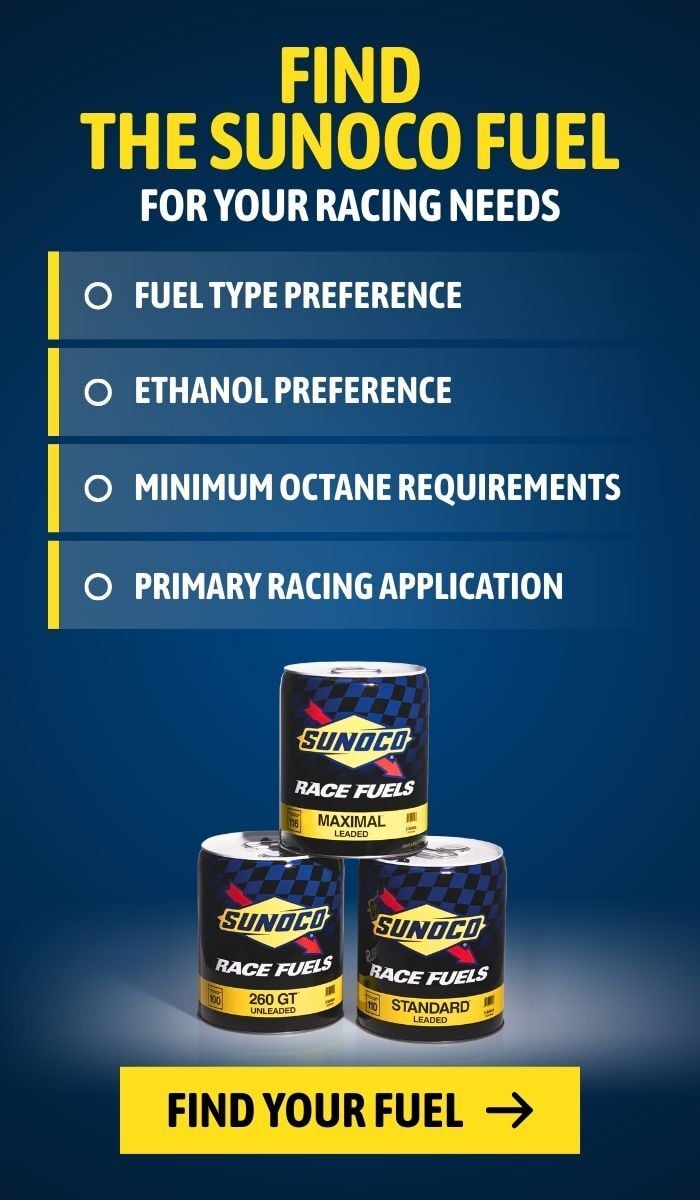
Sunoco LP describes partner training and technical assistance for its race fuel dealers, along with a technical helpline that dealers' customers can call for help choosing a fuel. On the marketing side, Sunoco provides co-branded advertising and point-of-purchase displays, plus campaigns designed to bring in foot traffic. Customers can also use the Sunoco Race Fuel Selector, which asks about the engine and application and recommends a fuel, so a dealer's staff has a consistent tool to point people toward.
What Does a Location Need to Sell Race Fuel Safely?
A race fuel dealer needs flammable liquid storage that meets safety rules and protects fuel quality, plus staff who can match customers to the right fuel and explain where each fuel can legally be used.
Storage and Fire Safety
For shops and other workplaces, the OSHA flammable liquids standard, 29 CFR 1910.106, sets limits such as a maximum of 60 gallons of Category 1, 2, or 3 flammable liquids in a single storage cabinet, and it accepts DOT-specification metal drums up to 60 gallons. Service stations fall under a separate section of the same standard, and state and local fire codes add their own requirements on top of the federal rules. A prospective dealer should confirm storage plans with the local fire authority before fuel arrives.
Protecting Fuel Quality on the Shelf
Sunoco's catalog listings call for opaque, tightly sealed containers kept where temperatures stay stable. Two fuels need extra care. Evo 10 and Sunoco 260 GT Plus, a 104 octane unleaded fuel, contain MMT (methylcyclopentadienyl manganese tricarbonyl), a manganese-based octane booster, and sunlight degrades their octane. Those pails belong away from windows and bright display lighting.
Ethanol blends absorb moisture from the air over time, which can lead to phase separation, where water and ethanol drop out of the gasoline. Sunoco's race fuel storage guidelines recommend labeling containers with the fuel type and date, limiting transfers between containers, and keeping ethanol fuels sealed with minimal airspace. Rotating stock so the oldest product sells first keeps shelf inventory fresh, and Sunoco's articles on why storage matters for race fuel quality and how long race fuel stays fresh make good training material for staff.
Knowing Where Each Fuel Can Be Used
Leaded race fuels are made for race engines without catalytic converters, and Sunoco labels them for off-road and racing use only. Several unleaded fuels carry the same restriction, including 260 GTX and Optima. Staff should be ready to explain the difference, and Sunoco's breakdown of leaded vs. unleaded race fuels covers it in plain terms.
California adds another layer. Gasoline sold for street use there has to meet the California Air Resources Board reformulated gasoline rules. Sunoco SS 100 is the CARB-compliant 100 octane unleaded option for California street use. Outside California, Sunoco 260 GT is the 100 octane unleaded fuel, and the catalog states it is not street legal in California or other areas that require CARB-compliant fuel.
Which Sunoco Race Fuels Should a New Dealer Stock?
A new Sunoco Race Fuels dealer should start with the fuels that match the engines its customers run most often. For many locations near a racetrack, that means a leaded fuel around 110 octane and an unleaded fuel that is safe for oxygen sensors, with additions based on the motorcycle, marine, small engine, or classic car customers the business also serves. The table below summarizes common starting points using figures from the Sunoco catalog.
|
Sunoco Fuel |
Octane |
Type |
Ethanol |
Catalog applications relevant to dealers |
Stated shelf life |
|
Standard |
110 |
Leaded |
0% |
Drag racing, oval track, road course, muscle and vintage cars |
Over 2 years |
|
Supreme |
112 |
Leaded |
0% |
Drag racing, oval track, road course, karts, snowmobiles |
Over 2 years |
|
SR18 |
118 |
Leaded |
0% |
Drag racing, nitrous and boosted engines, truck and tractor pulling |
2 years or more |
|
260 GTX |
98 |
Unleaded |
0% |
Oval track, road course, karts, snowmobiles |
Over 2 years |
|
260 GT |
100 |
Unleaded |
9.8% |
Oval track, drag racing, karts, motorcycle road course |
Over 1 year |
|
SS 100 |
100 |
Unleaded |
9.5% |
California street use, oval track, drag racing, snowmobiles |
Over 1 year |
|
Evo 10 |
105 |
Unleaded |
11% |
Modern engines with oxygen sensors, drag racing, road course |
2 years; protect from sunlight |
|
E85-R |
99 (estimated) |
Unleaded |
85% |
Drag racing, nitrous and boosted engines, road course |
Over 1 year |
|
Moto RP6 |
98 |
Unleaded |
15% |
Dirt bike and ATV, motorcycle road course |
Over 1 year |
|
MO2X |
112 |
Leaded |
6.8% |
Motorcycle road course, karts, snowmobiles |
Over 1 year |
|
Optima |
95 |
Unleaded |
0% |
Small engines, lawn equipment, boats, snowmobiles |
Over 3 years |
|
Surge |
105 |
Leaded |
0% |
Muscle and vintage cars, drag racing, snowmobiles |
3 years |
Fuels for Drag Strip and Oval Track Customers
Sunoco Standard and Sunoco Supreme, a 112 octane leaded fuel, cover a wide range of carbureted race engines and appear across nearly every racing category in the catalog. Locations serving high-compression or heavily boosted engines, including nitrous combinations, can add Sunoco SR18, a 118 octane leaded fuel, Sunoco's highest octane leaded option. Sunoco's guide on choosing the best fuel for drag racing shows how racers think through these choices.
Fuels for Modern Performance Cars
E85-R suits ethanol-tuned and boosted builds, and its 99 octane rating is an estimate because standard ASTM octane tests cannot accommodate its high oxygen content. Customers switching to E85-R need a tune and fuel system built for it, which makes this fuel a natural fit for shops that do that tuning work.
Fuels for Motorcycles, ATVs, and Snowmobiles
Moto RP6 and Sunoco MO2X, a 112 octane leaded fuel with 6.8% ethanol, cover most powersports racing needs in the catalog. MO2X is labeled off-road and racing only, so it suits competition machines, while Moto RP6 is listed for modern engines with oxygen sensors as well as dirt bikes and ATVs.
Fuels for Small Engines, Boats, and Stored Vehicles
Optima is the anchor product for this customer base because of its ethanol-free formula and long shelf life. Sunoco 94EZ, a 94 octane unleaded fuel with no ethanol, is also listed for small engines, lawn equipment, karts, and muscle and vintage cars, with a shelf life that exceeds two years. Surge serves collector car owners who want a leaded fuel that holds up through long storage.
How Do Local Dealers Fit Alongside Buying Race Fuel Online?
Sunoco also sells race fuel online through its distributor partner, PSC (Petroleum Service Company), which ships 5-gallon pails and 55-gallon drums to the customer's door. Racers reach that option through Sunoco's buy fuel online page, and Sunoco's guide to buying race fuel online explains how it works.
Online orders suit racers who plan their supply in advance and have room to store drums. A local dealer covers the purchases that cannot wait for shipping, including race-week fuel and fuel for an engine that was just tuned on a new blend. Local dealers can also answer questions in person, which matters to customers who are still learning what their engine needs. Sunoco's articles on where to buy racing fuel and finding race fuel near you describe how racers search for local sources.
Frequently Asked Questions
Can a non-Sunoco gas station sell Sunoco Race Fuels?
Yes, non-sunoco gas stations can carry Sunoco Race Fuels
How much space does a Sunoco race fuel display need?
Sunoco LP describes its race fuels cage program as requiring minimal time and space. The footprint depends on how many fuels and how much inventory a location carries, and the regional distributor works out those details with each business.
What package sizes do Sunoco Race Fuels come in?
Sunoco Race Fuels are sold in 5-gallon pails and 55-gallon drums. Pails let a dealer sell race fuel without installing tanks or pumps, and drums serve customers who buy in larger quantities.
Can a dealer sell leaded race fuel for street use?
Leaded Sunoco race fuels are labeled for off-road and racing use only.
Does Sunoco help dealers market race fuel?
Yes. Sunoco provides co-branded advertising and point-of-purchase displays for dealers, along with training and technical support for dealer staff. Customers of Sunoco dealers also have access to a technical helpline for fuel selection.
Can a dealer offer a custom blend or private label fuel?
Sunoco offers specialty blends and private labeling under certain conditions. A business interested in either option should raise it with its regional distributor.
How long can race fuel sit in a dealer's inventory?
Shelf life depends on the fuel and on storage conditions. Sunoco Optima exceeds three years in airtight, opaque containers, while Standard, Supreme, SR18, and 260 GTX are rated at two years or more. Oxygenated fuels such as 260 GT, E85-R, and Moto RP6 are rated at more than one year.
Taking the Next Step
A business that sees a fit should start on the Sunoco Race Fuels dealer application page or reach out to Sunoco Race Fuels, and Sunoco will connect it with the regional distributor for its area. Time spent beforehand in the full Sunoco fuel catalog and the Fuel Finder dealer map makes the first conversation with that distributor more productive, since it shows which fuels match the customer base and which ones are already available nearby.
Racers who found this page looking for fuel can use the Sunoco Fuel Selector to match a fuel to an engine, the Fuel Finder to locate a dealer, or the online ordering page for pails and drums to have fuel shipped directly.