.svg)
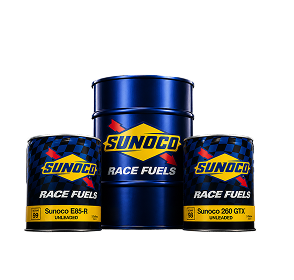
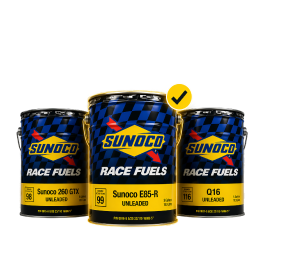



How Sunoco Fuels Support Modern Emissions-Compliant Race Cars
The debate over leaded versus unleaded race fuels has been active in motorsports for decades. What began as a technical necessity in the early days of high-performance engines has evolved into a topic that now includes regulatory policy, environmental impact, and advanced engine design. While leaded fuels were once the default for most racing applications, changes in engine technology and growing emphasis on emissions control have made unleaded options increasingly relevant. Still, for many race platforms, especially those using legacy or high-compression engines, leaded fuels remain unmatched in their performance characteristics.
Fuel choice plays a critical role in how an engine performs, how long it lasts, and how it responds to tuning adjustments. Engines built for maximum power often operate near the edge of mechanical and thermal limits. In these situations, a fuel's ability to resist knock, deliver consistent combustion, and stabilize under extreme cylinder pressures becomes vital. Leaded fuels have historically met these demands, but modern unleaded formulations have narrowed the gap in many racing disciplines. Racers today must weigh their fuel options not just by octane number, but by application, ruleset, and how the engine components interact with the combustion process.
For teams and enthusiasts looking to make informed decisions, understanding the science behind fuel formulation is just as important as dyno results or driver feedback. Leaded and unleaded fuels behave differently under high heat and load, and those differences can be felt in everything from throttle response to long-term reliability. Choosing between them requires more than personal preference, it demands technical awareness and a clear understanding of your engine's needs.
THE ROLE OF LEAD IN RACING FUELS
Tetraethyllead, or TEL, has long been used in racing fuels as an effective way to raise octane and prevent detonation. Its chemistry allows it to absorb and neutralize the pressure spikes that lead to engine knock, which is especially important in high-compression and high-RPM engines. Unlike some modern octane boosters, lead acts directly in the combustion chamber to stabilize flame propagation. That means it does more than simply raise a test score, it reshapes how the fuel behaves under peak load.
The presence of lead can also cushion valve seats, reducing wear in older engines that were not designed for unleaded fuel. In engines with aggressive cam profiles and long-duration valve overlap, this protective effect becomes even more valuable. It helps extend engine life while preserving power output across multiple heat cycles. This makes leaded fuel particularly attractive for big block drag engines, naturally aspirated road race platforms, and pulling trucks where cylinder pressure and combustion temperatures are pushed to the limit.
However, lead does have trade-offs. It contaminates oxygen sensors and catalytic converters, which makes it unsuitable for emissions-compliant or sensor-dependent systems. It also requires specialized handling and storage practices due to its toxicity and regulatory classification. Still, in engines designed to take full advantage of its properties, leaded fuel remains one of the most effective tools for maximizing horsepower while maintaining combustion stability at extreme performance levels.
SUNOCO'S LEADED RACING FUEL OPTIONS
Sunoco offers one of the most complete lines of leaded race fuels available today, with blends designed for everything from weekend bracket racing to professional-level drag, dirt, and truck pulling events. Each product is engineered to meet the specific needs of high-output engines that rely on octane stability, thermal resistance, and precise combustion characteristics.
Sunoco Standard, with a 110 octane rating, is widely used in bracket racing and modified stock car applications. It provides a solid foundation for small to mid-sized V8s running moderate compression ratios. For teams that need more thermal protection and knock resistance, Sunoco Supreme at 112 octane offers a tighter burn curve and greater detonation control under sustained load. This makes it well-suited to oval track and off-road race conditions where engine temperatures stay elevated throughout a long heat.
Sunoco Maximal, rated at 116 octane, steps up to meet the demands of extremely high-compression or large-displacement engines. Often chosen by drag racers and tractor pullers, Maximal handles advanced ignition timing and elevated boost without giving up throttle response. Sunoco DXP, also rated at 116 octane, is a top choice for dirt late model racing. At the top of the lineup is SR18, with a 118 octane rating and a fast-burning formulation tailored for maximum cylinder pressure. SR18 supports engines with unrestricted compression rules and advanced timing maps, making it ideal for professional drag and dirt applications where performance cannot be compromised.
Each of these fuels benefits from Sunoco's quality control and Double Distilled process, which ensures chemical uniformity and clean combustion across every drum. That level of consistency matters to racers who tune by the thousandth and rely on fuel as a controlled variable, not a wildcard. Whether it's a legacy setup or a modern purpose-built race engine, Sunoco's leaded lineup covers the critical octane and combustion needs of today's competitive motorsports.
ADVANTAGES AND CONSIDERATIONS FOR UNLEADED RACE FUELS
Unleaded race fuels are designed to meet the demands of modern engines that rely on sensors, electronic tuning systems, and emissions equipment. As more race vehicles adopt advanced engine management systems, unleaded fuels have become a practical and sometimes necessary choice for maintaining reliability and compliance.
One of the primary advantages of unleaded fuels is their compatibility with oxygen sensors and catalytic converters. These components are sensitive to lead, which can coat sensor surfaces and reduce their accuracy or cause failure. By avoiding metallic additives, unleaded fuels preserve the function of these systems and allow precise tuning adjustments based on real-time feedback.
Unleaded fuels also burn cleaner, resulting in fewer deposits on internal components like spark plugs and exhaust valves. This can contribute to longer service intervals and more consistent combustion. They are often used in late-model engines, crate engine classes, and any application that balances performance with durability and emissions sensitivity.
However, unleaded fuels may have limitations in terms of octane ceiling and detonation resistance, especially in extreme-performance builds. While oxygenated unleaded blends can help increase power output, they require specific tuning adjustments, such as richer air/fuel ratios, to maintain engine safety. Understanding how unleaded fuels respond to timing and combustion pressure is essential for getting the most out of them.
LEGAL AND ENVIRONMENTAL CONSIDERATIONS
Leaded race fuels, while still widely used in certain high-performance environments, are subject to strict legal and environmental regulations. In the United States, they are not legal for use in vehicles operated on public roads and are classified for off-road or competition use only. This distinction has implications not only for vehicle setup but also for transportation, storage, and use during mixed-purpose events.
Environmental concerns have driven much of the regulation around leaded fuels. Lead emissions are toxic and persistent, prompting tighter control over their sale and use. Tracks and sanctioning bodies in some regions are beginning to restrict or phase out leaded fuel to align with environmental policies and public health standards. Racers participating in series held at such venues need to be aware of these policies to avoid non-compliance.
Unleaded fuels, by contrast, offer greater flexibility. Many are legal for street use, provided they meet federal and state guidelines. They also simplify logistics for race teams that travel between events with varying rules or operate in classes that specify fuel type. For builders and tuners, using unleaded fuel can reduce complications tied to emissions inspections, sensor reliability, and fuel system maintenance.
Understanding the regulatory landscape is essential, especially for teams that compete in multiple regions or under different sanctioning bodies. Always consult the current rulebook and local guidelines before selecting a fuel for competition.
MATCHING FUEL TO YOUR ENGINE AND RACING CLASS
Choosing the right race fuel begins with understanding your engine's design and operating conditions. Key factors include compression ratio, boost level, ignition timing, fuel delivery system, and the presence of emissions or sensor-based components. These variables dictate the kind of fuel an engine can use safely and efficiently.
Engines with high compression or forced induction demand fuels with strong detonation resistance. In many cases, this means using high-octane leaded fuels that can withstand elevated pressures and temperatures without knocking. These fuels are commonly used in unrestricted classes where the focus is on maximum output and combustion stability.
In contrast, engines that rely on closed-loop tuning, oxygen sensors, or catalytic converters need unleaded fuels. These engines benefit from fuels that burn cleanly and maintain sensor accuracy. Crate engine classes, emissions-compliant builds, and newer EFI platforms often require unleaded fuel not only for regulatory reasons but also to preserve component life and ensure reliable tuning.
Race classes also have specific fuel regulations. Some series limit the octane level or require fuels that meet a particular formulation standard. Using a fuel that exceeds or falls outside these limits can lead to disqualification. Understanding the fuel rules for your class, and how they align with your engine build, is critical for staying competitive and legal.
Making the right choice involves balancing performance needs with mechanical compatibility and compliance. A well-matched fuel enhances power, protects the engine, and simplifies tuning across different race conditions.
THE SUNOCO ADVANTAGE: QUALITY AND CONSISTENCY ACROSS ALL FUELS
Race fuel, whether leaded or unleaded, must be consistent. For teams fine-tuning ignition timing and air/fuel ratios, even slight variations in fuel properties can affect engine response and power output. That's why consistency in manufacturing and formulation is critical. Professional-grade fuels are produced to exacting specifications, often with double distillation to eliminate unwanted compounds and maintain uniform chemical structure.
Fuel consistency plays a direct role in how well an engine can be tuned and how predictably it performs on race day. A driver may only feel the difference as a slight loss of throttle response or a stumble off the line, but for the tuner, it may indicate subtle changes in burn speed or volatility. With stable fuel, teams can lock in their setups, minimize guesswork, and reduce the risk of chasing phantom tuning issues caused by fuel variability.
Support also matters. Racers benefit from fuel suppliers that provide detailed technical data and real-world support for different racing disciplines. Access to spec sheets, combustion profiles, and tuning recommendations can help teams dial in optimal performance faster. Whether the engine is naturally aspirated or boosted, carbureted or injected, having the right fuel with verified consistency is key to success on the track.
CONCLUSION: MAKING THE RIGHT CHOICE FOR MAXIMUM PERFORMANCE
Leaded and unleaded race fuels each serve important roles in motorsports. Leaded fuels provide unmatched knock resistance and combustion stability for extreme performance builds, particularly in older or unrestricted engines. Unleaded fuels, on the other hand, support cleaner operation, emissions compliance, and compatibility with modern electronics and tuning systems.
Fuel selection should always begin with the engine's compression, design, and tuning strategy, followed by the rules of the racing class. Consideration for long-term reliability, component compatibility, and real-world drivability will help racers make informed decisions that go beyond just octane numbers.
As engine technology continues to evolve, so do the fuels designed to power them. Understanding the science behind both leaded and unleaded race fuels equips racers, tuners, and builders with the tools they need to extract maximum performance while staying within the lines of reliability and regulation. The right fuel is not just about horsepower it's about unlocking the full potential of the engine in its specific environment.
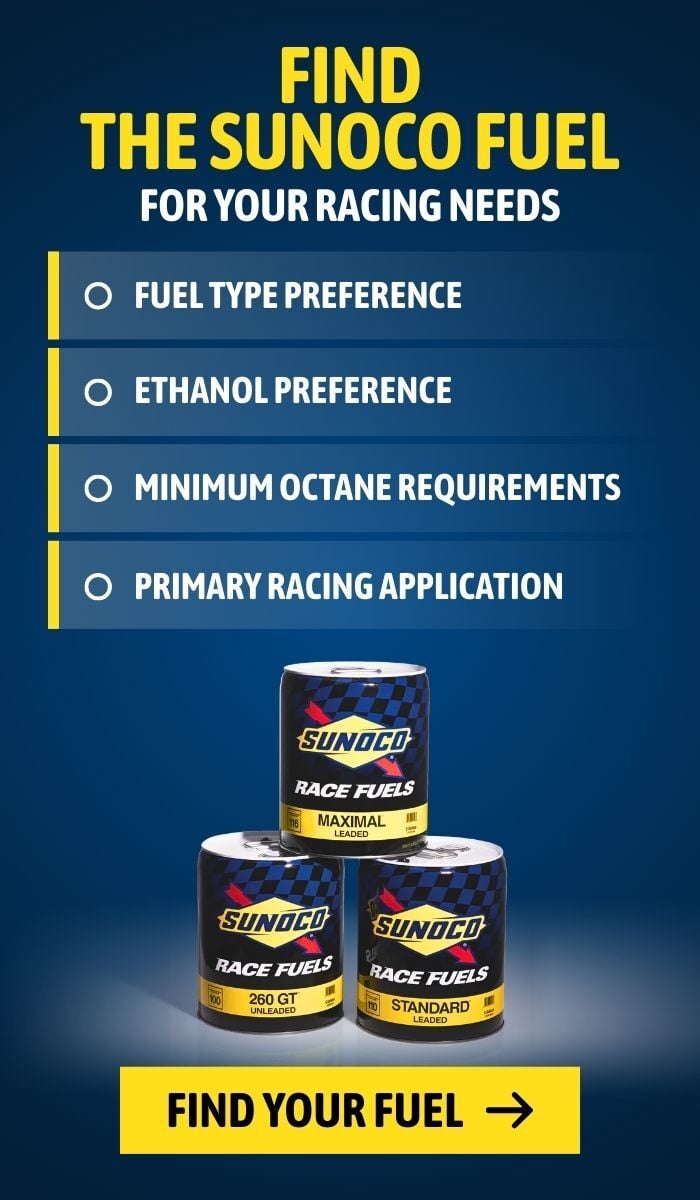
For more information on selecting the right racing fuel for your application, visit Sunoco Race Fuels or use their fuel selector tool to find the perfect match for your engine and racing requirements.