.svg)




How to Tell If Your Car Needs More Octane: Signs, Symptoms, and When to Upgrade Your Fuel
THE SWEET SPOT BETWEEN PUMP GAS AND RACE FUEL
The 100 octane question usually surfaces during one of three conversations: a tuner recommending it for your modified engine, a track day enthusiast wondering if it is worth the investment, or an engine builder explaining why your compression ratio demands it. Unlike the extremes of pump gas at one end and exotic race fuels at the other, 100 octane occupies the sweet spot between street performance and dedicated motorsports applications.
This middle ground makes 100 octane simultaneously the most accessible race fuel for performance enthusiasts and the most misunderstood. Street car owners wonder if 100 octane will unlock hidden power in stock engines. Track day drivers debate whether the cost justifies occasional performance use. Engine builders carefully calculate whether 100 octane provides adequate knock protection for specific compression ratios and boost levels.
Understanding 100 octane requires looking beyond the number on the fuel drum to examine what octane rating actually represents, which engines genuinely benefit from higher knock resistance, and how fuel consistency affects performance beyond simple octane specifications. The goal is not convincing every performance car owner they need 100 octane fuel. Rather, it is providing the technical foundation to make informed decisions about when 100 octane makes sense for specific applications and when other options serve better.
One critical point deserves emphasis from the start: octane rating measures knock resistance, not energy content or inherent power potential. Higher octane does not automatically produce more horsepower. The performance benefits come from enabling engine modifications and tuning strategies that lower octane fuel cannot safely support. An engine already running optimally on 93 octane pump gas gains nothing from switching to 100 octane unless modifications or tuning changes create demands that exceed 93 octane's knock resistance capabilities.

WHAT IS 100 OCTANE GAS?
DEFINING OCTANE RATING
Octane rating quantifies fuel's resistance to knock and detonation under pressure and heat. When fuel ignites spontaneously before the spark plug fires, or when multiple flame fronts collide during combustion, the resulting pressure spikes create the characteristic knocking sound that indicates potentially destructive detonation. Higher octane fuels resist this uncontrolled combustion more effectively, allowing engines to operate at higher compression ratios, increased boost pressures, and more aggressive ignition timing without knock. The octane number itself derives from laboratory testing using standardized procedures defined by ASTM D2699 and D2700. Research Octane Number (RON) measures performance under mild conditions, while Motor Octane Number (MON) evaluates fuel stability under more severe operating scenarios. In the United States, the posted octane rating uses the Anti-Knock Index (AKI), calculated as (R+M)/2, which averages both measurements.
The distinction matters because octane rating reflects knock resistance specifically, not other fuel properties that influence performance. Energy content per gallon remains relatively constant across octane levels, containing approximately 114,000 BTU per gallon whether rated at 87 or 100 octane. The octane number does not indicate fuel density, vapor pressure, or combustion characteristics beyond knock resistance.
WHAT MAKES 100 OCTANE DIFFERENT FROM PUMP PREMIUM?
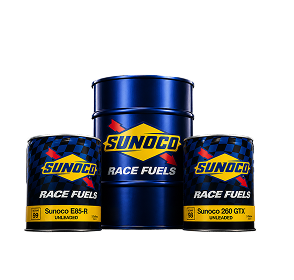
The gap between pump premium gasoline at 91-93 octane and 100 octane race fuel involves more than just seven to nine points of knock resistance. Purpose-built 100 octane race fuel like Sunoco 260 GT and Sunoco SS 100 approach formulation differently than consumer gasoline. Both are unleaded, oxygen-sensor-safe options at 100 octane. Sunoco 260 GT is the go-to choice for most markets, while SS 100 is formulated to meet California Air Resources Board (CARB) requirements for those in CARB-regulated states.
Pump premium serves millions of vehicles across diverse climates and conditions. Refiners formulate to meet regulatory requirements while minimizing costs, resulting in fuel that varies seasonally with winter and summer blends, changes regionally based on local regulations, and fluctuates batch-to-batch as refineries adjust to changing feedstocks. Race fuel targets consistent performance characteristics that enable precise tuning and reliable operation.
Specific gravity stays within tight tolerances batch-to-batch, ensuring fuel metering accuracy. Vapor pressure maintains consistent values that prevent hot-restart problems and vapor lock. The hydrocarbon composition remains stable, providing predictable combustion characteristics that allow optimized ignition timing to stay relevant from one fuel purchase to the next.
Quality control standards for race fuel exceed consumer gasoline requirements because racing applications demand consistency that street vehicles do not require. Race engines tuned to extract maximum performance operate at narrower margins where fuel inconsistency creates problems. The tighter specifications race fuel maintains directly enable the optimization and reliability that competitive racing demands.
Storage stability represents another practical difference. Pump gasoline degrades relatively quickly, particularly ethanol-blended varieties common in most markets, with a typical lifespan of 30-90 days. Many 100 octane race fuels, formulated without ethanol and with more stable hydrocarbon selections, maintain performance characteristics for one to two years when properly stored.
WHY OCTANE MATTERS IN PERFORMANCE ENGINES
DETONATION, PRE-IGNITION, AND ENGINE SAFETY
Detonation occurs when extreme heat and pressure cause the air-fuel mixture to ignite spontaneously at multiple points in the combustion chamber rather than burning smoothly from a single flame front. These multiple ignition sites create colliding flame fronts that generate intense pressure spikes that can erode metal, crack pistons, blow head gaskets, and destroy engines in remarkably short time. SAE research on knock damage mechanisms identifies surface erosion, ring fracture, piston land cracking, piston blow-by, and seizure as the primary failure modes resulting from sustained detonation. The research confirms two distinctly different aspects of knocking combustion that initiate damage: global heat flux and local pressure-temperature pulses.
Pre-ignition represents a related phenomenon where the air-fuel mixture ignites before the spark plug fires. Hot spots in the combustion chamber can trigger combustion prematurely, creating peak cylinder pressure while the piston still travels upward, forcing the engine to fight itself. The resulting loads on connecting rods and crankshaft bearings can exceed design limits catastrophically.
Higher octane fuel protects against these destructive events by resisting spontaneous ignition despite extreme temperatures and pressures. This resistance provides the safety margin that allows high-compression engines to operate reliably and enables tuners to optimize ignition timing for maximum power without triggering knock.
WHEN HIGHER OCTANE HELPS AND WHEN IT DOES NOT
Engines that benefit from 100 octane share common characteristics. High static compression ratios create elevated cylinder pressures and temperatures. Naturally aspirated engines approaching or exceeding 11:1 compression typically require octane above pump premium's 91-93 rating. The exact threshold varies with combustion chamber design and cooling efficiency, but compression ratios in the 10.5:1 to 11.5:1 range often represent the transition point where 100 octane becomes beneficial.
Forced induction amplifies octane requirements dramatically. Turbochargers and superchargers compress intake air before it enters combustion chambers, raising both pressure and temperature. Every pound of boost pressure effectively increases an engine's compression ratio. A 9:1 compression engine running 15 psi of boost experiences cylinder conditions similar to a naturally aspirated engine with 16:1 compression.
Aggressive ignition timing strategies that extract maximum performance demand octane ratings that support advanced timing without knock. Sustained high-load operation generates heat that accumulates in combustion chambers, raising detonation risk. Track use where engines spend extended periods at high RPM under significant load creates more demanding conditions than brief acceleration runs on the street.
Engines that derive no benefit from 100 octane include stock or mildly modified combinations operating well below knock thresholds. Factory engines built to 9:1 or 10:1 compression and calibrated for 87-91 octane pump gas already run with substantial detonation margins. Running 100 octane in these engines provides excess knock resistance the calibration cannot utilize, producing identical power because timing and compression ratio do not challenge even 91 octane's capabilities.
The fundamental principle: octane rating only matters when engines operate near their knock threshold on available fuel. Adequate octane enables optimization that lower octane prevents. Excess octane provides no additional benefit because the engine cannot utilize knock resistance beyond what it actually needs.

WHO ACTUALLY NEEDS 100 OCTANE GAS?
COMMON USE CASES
Performance street cars with increased compression represent one of the most common appropriate applications. Engine builds targeting 10.5:1 to 11.5:1 compression ratios often exceed pump premium's capabilities, particularly when combined with aggressive camshaft timing or warm climate operation. A street-driven muscle car built to 11:1 compression with aluminum heads might run acceptably on 93 octane in cool weather but experience borderline knock during summer heat.
Aftermarket tuning that advances ignition timing or increases boost pressure creates octane demands beyond factory calibrations. A turbocharged sport compact running factory boost on the stock tune functions safely on premium pump gas. Increase boost to 18 psi and optimize timing for that boost level, and the knock resistance requirements jump substantially.
Track day and road course cars benefit from 100 octane's consistency and knock resistance under sustained high-load operation. Heat accumulates during track sessions in ways brief street acceleration runs never produce. Fuel consistency matters more during competition use where setup optimization and lap time consistency depend on predictable engine behavior.
Vintage engines designed during eras when pump gas offered higher octane ratings sometimes require 100 octane for proper operation. Classic muscle cars from the late 1960s and early 1970s often featured 10.5:1 to 11:1 compression ratios optimized for the premium pump gas available then, which delivered higher octane than today's premium. Running these engines on modern 91-93 octane fuel forces timing retard that compromises performance and drivability.
Dirt track and circle track racing classes where 100 octane represents common fuel choice benefit from standardized fuel selection. Many regional racing series establish 100 octane as the maximum permitted fuel to control costs while allowing more aggressive engine building than pump gas supports.
100 OCTANE VS PUMP GAS (91-93)
KNOCK RESISTANCE AND CONSISTENCY
The seven to nine point octane advantage 100 octane race fuel holds over premium pump gas represents the most obvious performance difference, but consistency across multiple specifications provides equally important benefits that separate race fuel from consumer gasoline.
Pump gas variability stems from multiple sources. Seasonal blend changes occur twice annually as refiners switch between winter formulations emphasizing cold-start performance and summer blends targeting reduced evaporative emissions. Winter fuel's higher volatility aids starting in cold conditions but creates vapor lock risks during warm weather. Summer fuel's reduced volatility prevents excessive evaporation but can cause hard starting in cool mornings.
Ethanol content variations introduce another inconsistency source. While most premium pump gas contains 10% ethanol (E10), actual percentages vary by season, region, and individual station. The ethanol percentage affects effective octane rating, specific gravity, stoichiometric air-fuel ratio requirements, and energy content per gallon.
Regional refining differences create geographic inconsistencies where pump premium in one state differs measurably from fuel in another region despite both meeting their respective 91 or 93 octane ratings. Batch-to-batch variability occurs even within single stations as terminals receive fuel from different refineries or as refineries adjust blending to changing feedstock availability.
Race fuel consistency eliminates these variables through controlled formulation and quality standards. Sunoco's manufacturing processes ensure that 100 octane race fuel purchased in February performs identically to fuel obtained in August, in California or Florida, from current inventory or future production. This consistency enables precise tuning that pump gas variability prevents.
PERFORMANCE DIFFERENCES IN REAL-WORLD USE
The performance impact of switching from pump premium to 100 octane race fuel depends entirely on whether the engine's calibration can utilize the additional knock resistance. An engine running optimal calibration on 93 octane pump gas produces identical power when switched to 100 octane race fuel without any tuning changes. The extra knock resistance provides unused safety margin that does not translate to performance.
The power benefits emerge when higher octane enables calibration changes that lower octane fuel cannot support. Advancing ignition timing by 2-4 degrees in regions where detonation previously limited advance produces measurable torque and power increases. Dyno testing typically shows 3-8% power improvements when aggressive timing optimization becomes possible with adequate octane.
Forced induction applications see similar benefits when higher octane supports increased boost pressure. An engine conservatively tuned to 12 psi boost to avoid knock on 93 octane might safely run 15-16 psi on 100 octane. The increased boost delivers more air mass that combines with proportionally more fuel to produce substantially more power.
The safer operating window higher octane provides benefits all engines regardless of whether aggressive optimization occurs. Operating with substantial knock safety margin reduces the risk of destructive detonation if conditions vary or if unusual circumstances arise.
IS 100 OCTANE Gas LEADED OR UNLEADED?
UNDERSTANDING LEADED VS UNLEADED FUELS
The question of whether 100 octane fuel contains lead requires understanding that 100 octane describes knock resistance level, not a single fuel formulation. Multiple 100 octane products exist in both leaded and unleaded versions, each serving different applications based on engine design and regulatory requirements. Under the EPA's Clean Air Act ban on leaded motor vehicle fuel, leaded gasoline has been prohibited for use in on-road vehicles since January 1, 1996. Leaded race fuel remains permitted for off-road and racing use only.
Lead additives boost octane rating and provide valve seat lubrication in engines lacking hardened valve seats. Modern complications arise from lead's incompatibility with emissions control equipment. Oxygen sensors used in closed-loop fuel control systems suffer permanent damage from lead exposure. Catalytic converters similarly cannot tolerate lead, as lead compounds permanently poison the catalyst materials. Any vehicle equipped with oxygen sensors or catalytic converters cannot use leaded fuel without causing immediate expensive damage.
CHOOSING THE RIGHT SUNOCO 100 OCTANE FUEL
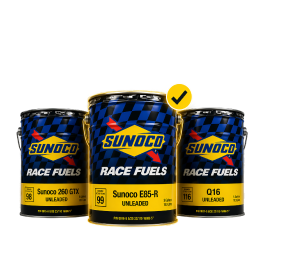
Sunoco offers two primary 100 octane unleaded options. Sunoco 260 GT delivers consistent, high-quality 100 octane performance and is widely available across most U.S. markets. Sunoco SS 100 shares the same octane rating and unleaded formulation, but is specifically engineered to comply with California Air Resources Board regulations, making it the correct choice for California-based racers and those in other CARB-regulated areas. Both are free of metallic additives, safe for oxygen sensors and catalytic converters, and compatible with modern fuel-injected engines.
For race-only applications in classes permitting leaded fuel, leaded 100 octane options provide valve seat protection benefits along with knock resistance. Modern engine materials typically do not require lead's valve seat lubrication benefits. Unless building engines with specific vintage components requiring lead lubrication, unleaded formulations provide adequate protection while maintaining compatibility with modern fuel systems.
TUNING CONSIDERATIONS WHEN RUNNING 100 OCTANE Gas
Achieving optimal performance with 100 octane fuel requires calibration attention rather than simply filling the tank and expecting automatic optimization. Both carbureted and fuel-injected engines need proper setup to extract the benefits higher octane enables.
Carbureted engines face specific considerations related to fuel metering. Jetting requirements may change when switching from pump premium to 100 octane race fuel because specific gravity variation between fuels affects how much fuel mass flows through jets sized for volume delivery. While the magnitude typically requires only minor jet size adjustments, ignoring the effect leaves mixture ratios suboptimal.
Carburetor calibration depends on fuel consistency. A carburetor jetted perfectly for fuel with specific density delivers different mixture ratios when fuel density changes. Purpose-built race fuel maintains consistent specific gravity that keeps jetting valid from one purchase to the next.
Fuel-injected engines handle 100 octane race fuel more gracefully than carburetors manage fuel property variations, but achieving optimal performance still requires calibration attention. Timing adjustments represent the primary optimization opportunity when switching to higher octane fuel. The process involves carefully advancing timing while monitoring for knock, testing, then continuing until optimal values emerge.
The “just pour it in” mistake costs performance and wastes the benefits higher octane enables. Simply switching from 93 octane pump gas to 100 octane race fuel without any calibration changes produces identical power output because the engine continues running the same conservative timing and mixture values that pump gas required. The extra knock resistance sits unused until calibration takes advantage of it.
Race engine management systems often operate in open-loop mode without oxygen sensor feedback, relying on accurate calibration for specific fuel. These systems demand accurate fuel property knowledge for proper calibration. Using consistent race fuel with documented properties allows precise calibration that open-loop systems depend upon.
COMMON MYTHS ABOUT 100 OCTANE FUEL
MYTH 1: HIGHER OCTANE ALWAYS MAKES MORE POWER
The most persistent misconception suggests that higher octane numbers automatically translate to increased horsepower regardless of engine specifications or calibration. Octane rating measures knock resistance, not energy content. Gasoline contains approximately 114,000 BTU per gallon whether rated at 87, 93, or 100 octane.
Power gains materialize when higher octane enables optimization strategies that lower octane prevents. If an engine runs conservative timing to avoid knock on 93 octane, advancing timing with 100 octane produces more power by improving combustion phasing. The power increase comes from better timing, not from the octane itself.
MYTH 2: 100 OCTANE IS SAFER FOR ANY ENGINE
Another misconception treats higher octane as universally beneficial regardless of engine specifications. Adequate octane provides all the protection engines need, while excess octane offers no additional benefits. An engine safely running 11:1 compression on 100 octane gains nothing from switching to 110 or 114 octane.
The safety consideration actually works differently than excess octane protection. Engines benefit from running octane ratings appropriate to their requirements with modest safety margin rather than excessive overspecification. Cost considerations reinforce that excessive octane wastes resources without providing value.
MYTH 3: MIXING PUMP GAS AND 100 OCTANE EQUALS RACE FUEL
The practice of blending pump premium with 100 octane race fuel to create intermediate octane levels generates misconceptions. While octane blending calculations work mathematically to estimate resulting knock resistance, other fuel properties do not average predictably.
Mixing 93 octane pump gas with 100 octane race fuel in equal proportions produces fuel approximately 96.5 octane mathematically. However, specific gravity, vapor pressure, hydrocarbon composition, and additive packages combine in ways that create properties different from either original fuel. The consistency that purpose-built race fuel provides disappears when blending with pump gas.
HOW TO KNOW IF YOU NEED 100 OCTANE
COMPRESSION RATIO GUIDELINES
Static compression ratio provides the most straightforward indicator of octane requirements for naturally aspirated engines. Engines built to 10.5:1 compression or higher typically benefit from octane above pump premium's 91-93 rating, though the exact requirement varies with other factors.
The 11:1 compression threshold represents a common transition point where most engines require or strongly benefit from 100 octane fuel. Above this compression level, pump premium rarely provides adequate knock resistance for performance optimization. Aluminum versus iron cylinder head construction influences octane requirements through thermal conductivity differences, with aluminum heads allowing slightly higher compression ratios on given octane.
BOOST PRESSURE THRESHOLDS
Forced induction applications require considering both static compression ratio and boost pressure. Every pound of boost pressure effectively increases the engine's compression ratio. A 9:1 compression engine running 14.7 psi of boost experiences cylinder conditions similar to an 18:1 naturally aspirated engine.
Low boost applications running 5-8 psi with efficient intercooling might function adequately on 93 octane pump premium. Medium boost setups pushing 10-15 psi typically require 100 octane minimum. High boost applications exceeding 15-20 psi almost universally require octane ratings above 100.
SYMPTOM RECOGNITION
Recognizing symptoms suggesting inadequate octane helps identify when current fuel fails to meet engine requirements. Audible knock represents the most obvious indicator. The characteristic rattling or pinging sound occurs during acceleration under load, particularly at lower RPM where cylinder pressures peak.
Ignition timing being constantly retarded by engine management systems indicates the calibration encounters knock that adaptive knock control compensates for. Modern systems monitor knock sensors and automatically retard timing when detonation appears. While this protection prevents immediate damage, it sacrifices performance.
PROFESSIONAL CONSULTATION
The most reliable approach to determining octane requirements involves consulting with experienced engine builders or professional tuners familiar with similar engine combinations. Professional dyno tuning allows systematic evaluation of octane requirements under controlled conditions, determining the minimum octane needed for optimal performance.
Engine builders specializing in particular platforms maintain databases of successful combinations documenting octane requirements for various compression ratios, boost levels, and applications. The investment in professional guidance pays dividends through optimal fuel selection that neither restricts performance through inadequate octane nor wastes resources on excessive ratings.
SUNOCO'S 100 OCTANE FUEL OPTIONS
Not all 100 octane fuels are built the same. Sunoco offers two distinct unleaded options to match your location and application.
Sunoco 260 GT
The flagship 100 octane choice for most racers and performance builders outside of California. Sunoco 260 GT is an unleaded fuel with approximately 9.8% ethanol content, formulated for consistent octane, clean combustion, and broad compatibility with modern fuel systems including those with oxygen sensors and catalytic converters. It suits everything from track day cars and street-strip builds to circle track and drag racing applications.
Sunoco SS 100
SS 100 delivers the same 100 octane rating and unleaded formulation as 260 GT, but is engineered specifically to meet California Air Resources Board (CARB) standards, making it the correct choice for racers in California and other states with CARB-compliant fuel requirements. Like 260 GT, it contains no metallic additives and is safe for oxygen sensors, catalytic converters, and two-stroke synthetic and mineral-based engine oils.
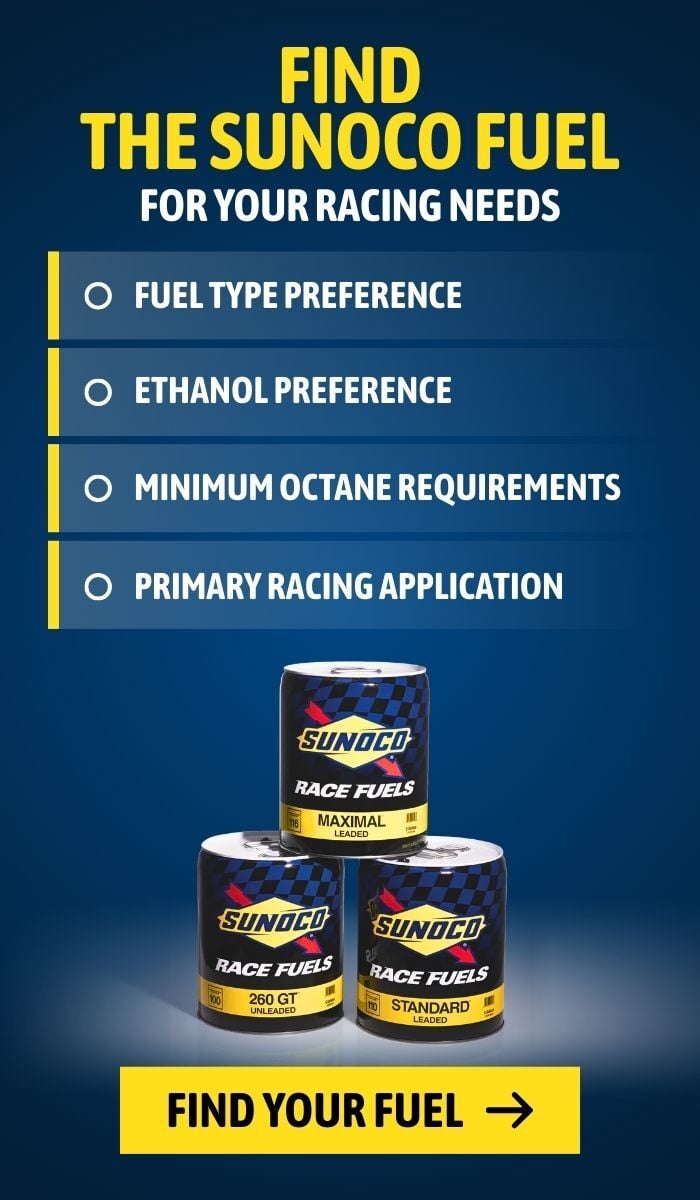
Not sure which is right for you? Use the Sunoco Fuel Selector or call the technical support line at 1-800-RACE-GAS.
FREQUENTLY ASKED QUESTIONS
CAN I MIX 100 OCTANE WITH PUMP GAS?
Yes, 100 octane race fuel can be blended with pump premium to create intermediate octane ratings. The resulting octane averages mathematically between the two fuels proportional to blend ratio. However, other fuel properties do not blend as predictably as octane rating. Specific gravity, vapor pressure, and storage stability of the mixture may differ from either pure fuel. For racing applications requiring consistent fuel properties, using pure race fuel rather than blends provides better results.
WILL 100 OCTANE HURT MY ENGINE?
No, 100 octane fuel will not damage engines when using appropriate unleaded or leaded formulations for the application. Unleaded 100 octane works safely in any engine compatible with pump premium gasoline. The higher octane rating simply provides additional knock resistance without changing combustion chemistry in harmful ways. Leaded 100 octane damages oxygen sensors and catalytic converters in emissions-equipped vehicles but poses no problems for race-only engines without such equipment..
HOW LONG DOES 100 OCTANE Fuel LAST?
Properly stored 100 octane race fuel typically maintains performance characteristics for one to two years in sealed containers kept cool and away from direct sunlight. Storage life depends on several factors including whether the fuel contains oxygenates, container quality, and storage conditions. Non-oxygenated formulations last longer than oxygenated versions. Once opened and exposed to air, fuel should be used within several months for optimal performance.
WHERE CAN I BUY 100 OCTANE GAS?
100 octane race fuel is available through race fuel dealers, performance shops, and some racing facilities that offer fuel at the pump. Use the Sunoco Fuel Finder to locate authorized dealers and distributors near you. Buying directly from distributors or in larger quantities typically reduces per-gallon cost.
IS 100 OCTANE Gas STREET LEGAL?
Unleaded 100 octane race fuel remains street legal throughout the United States with no federal restrictions on its use in vehicles operated on public roads. State and local regulations typically follow federal guidelines. Leaded race fuel cannot legally be used in vehicles operated on public roads due to emissions equipment damage concerns and environmental regulations. The practical limitation for street use involves availability and cost rather than legality.
WHEN 100 OCTANE MAKES SENSE AND WHEN IT DOES NOT
SITUATIONS WHERE 100 OCTANE IS THE RIGHT CHOICE
Performance builds combining compression ratios above 10.5:1 with aggressive tuning benefit clearly from 100 octane's knock resistance. The fuel enables timing optimization and mixture tuning that pump premium's limited knock resistance prevents. Track day use and competition driving creates sustained high-load conditions where heat accumulation challenges knock resistance more severely than brief street acceleration.
Heat-soaked conditions common in racing paddocks and drag strip staging lanes create elevated underhood temperatures that increase detonation tendency. Summer racing in hot climates combines ambient heat with engine heat soak to produce challenging conditions where extra knock resistance proves valuable.
Tuned performance builds seeking maximum output within their compression and boost parameters benefit from the headroom 100 octane provides. Even if engines might theoretically run on pump premium, the safety margin race fuel offers allows aggressive optimization without operating constantly at knock threshold.
WHEN ANOTHER FUEL MAY BE BETTER
Higher compression ratios pushing 12:1 and beyond in naturally aspirated engines often require octane above 100 to safely optimize performance. Moving to 110 octane provides the margin these demanding applications need. Similarly, forced induction setups exceeding 15-18 psi boost typically benefit from stepping up to 110 or higher octane ratings.
Oxygenated fuel requirements arise in some racing applications where rules mandate or where the performance characteristics oxygenated formulations provide prove beneficial. Spec fuel rule compliance in certain racing classes mandates specific fuel choices that may not include 100 octane options.
Budget considerations sometimes make 100 octane impractical for applications where pump premium provides adequate knock resistance. Conservative street builds running 10:1 compression with mild tuning do not genuinely need 100 octane's capabilities. Saving money on unnecessary octane allows investment in more beneficial modifications.
MAKING THE RIGHT CHOICE FOR YOUR ENGINE
Understanding 100 octane fuel requires recognizing what octane rating actually represents and how its benefits must be extracted through proper application. The seven to nine point knock resistance advantage over pump premium enables performance optimization through compression ratio selection, ignition timing advance, and boost pressure increases that lower octane prevents. These optimizations produce the power gains and performance improvements racers seek, but only when engines are built and tuned to utilize the additional knock resistance.
Octane rating alone does not create power. The fuel simply resists detonation while combustion chamber design, mechanical compression, calibration optimization, and operating conditions determine actual performance. Engines operating well below knock threshold on pump gas gain nothing from switching to 100 octane without supporting changes. Conversely, aggressive engines pushing compression, boost, or timing to levels pump gas cannot benefit substantially from adequate octane rating that allows safe optimization.
Consistency matters as much as absolute octane rating for engines tuned to extract maximum performance. Purpose-built race fuel provides predictable properties that enable precise calibration and reliable operation. These quality attributes separate race fuel from pump gasoline as fundamentally as octane rating differences.
Sunoco Race Fuels provides not just fuel products but technical knowledge and support that helps racers make informed decisions. For personalized guidance on matching the right fuel to your build, use the Sunoco Fuel Selector or contact the technical team at 1-800-RACE-GAS.
Next in this series, we examine what changes when stepping up to 110 octane fuel, exploring the compression ratios and boost levels that require the additional knock resistance, how combustion characteristics differ at higher octane levels, and which racing applications genuinely benefit from moving beyond 100 octane. Understanding the progression from 100 to 110 octane helps racers recognize when they have reached the threshold where current fuel limits performance and when additional octane enables further optimization.