.svg)



105 Octane Gas: What It Is, Who Needs It, and When Racers Should Use It
When it comes to racing, fuel selection plays a critical role in both performance and engine protection. At the heart of this decision is octane rating, a measure of how effectively a fuel resists knock and detonation under extreme pressure and heat. For high-performance and racing engines operating at elevated compression ratios or boost levels, choosing the correct octane rating is essential for extracting maximum horsepower while ensuring engine longevity and consistency on race day.
The relationship between octane and engine performance is more complex than many racers realize. While selecting the right fuel might seem straightforward, understanding the nuances of octane ratings, how they interact with different engine configurations, and what they mean for your specific racing application can make the difference between a podium finish and a costly engine rebuild. This comprehensive guide will help you navigate the world of octane ratings and make informed decisions about fuel selection for your racing program.
WHAT OCTANE RATING REALLY MEANS
Octane rating serves as a fuel's resistance index against uncontrolled combustion events. When fuel ignites at the wrong time or in the wrong manner inside your engine's combustion chamber, it creates destructive pressure waves that we commonly refer to as knock or detonation. These events can quickly destroy engine components, making octane rating one of the most critical specifications to understand when building or tuning a racing engine.
The chemistry behind octane involves the molecular structure of the fuel itself. Fuels with higher octane ratings contain hydrocarbons that resist auto-ignition under pressure and heat. This resistance allows engines to operate at higher compression ratios, more aggressive ignition timing, and elevated boost pressures without experiencing destructive knock. The actual combustion process in a high-performance engine happens incredibly quickly, with flame fronts propagating across the combustion chamber in milliseconds. Higher octane fuels maintain controlled burn rates even under extreme conditions.
RESEARCH OCTANE NUMBER AND MOTOR OCTANE NUMBER
Octane measurements vary across regions and testing methods, which makes understanding these standards crucial for making informed fuel choices. The two primary measurements used globally are Research Octane Number (RON) and Motor Octane Number (MON). These aren't arbitrary numbers but rather results from standardized testing procedures developed decades ago to ensure consistent fuel quality ratings.
RON evaluates fuel performance under mild operating conditions, simulating scenarios like city driving or moderate acceleration. The test engine runs at 600 RPM with a variable compression ratio, and the fuel temperature is maintained at 52°C. While these conditions might seem far removed from racing applications, RON provides valuable baseline data about a fuel's anti-knock properties.
MON tests fuel stability under more severe, demanding scenarios that better represent racing conditions. The test runs at 900 RPM with higher intake temperatures of 149°C and includes variable ignition timing. This more aggressive test environment produces lower octane numbers for the same fuel, reflecting how performance degrades under stress. The difference between a fuel's RON and MON values, called the fuel's "sensitivity," provides insight into how it will perform under varying conditions.
UNDERSTANDING REGIONAL RATING DIFFERENCES
In the United States, the octane rating displayed at fuel pumps and on race fuel containers uses the (R+M)/2 formula, which averages both RON and MON values. This Anti-Knock Index, or AKI, provides a middle-ground measurement that attempts to represent real-world performance across various driving conditions. When you see "93 octane" at a premium pump in the U.S., that's an AKI rating derived from averaging the fuel's RON and MON numbers.
Many other countries around the world, however, rely exclusively on RON for their ratings. European pumps displaying "98" or "100" are showing RON values, not AKI. This means a "98 RON" fuel overseas doesn't directly compare to a "98 octane" rating in the U.S. In fact, a 98 RON fuel typically equates to approximately 93 AKI when you account for the average sensitivity of most fuels. This discrepancy has confused countless racers traveling internationally or importing vehicles designed for different fuel markets.
Understanding which standard applies to your fuel helps ensure proper engine tuning and prevents confusion when switching between different fuel sources. If you're tuning an imported engine or following tuning advice from overseas sources, always verify whether octane ratings are expressed as RON or AKI. The difference can be significant enough to cause detonation if misunderstood.
WHY HIGH-PERFORMANCE ENGINES NEED HIGHER OCTANE
The physics of internal combustion dictate that higher compression ratios and increased cylinder pressures generate more power. By compressing the air-fuel mixture more before ignition, engines extract more energy from every combustion event. However, this increased compression also raises temperatures and pressures to levels where lower-octane fuels spontaneously ignite before the spark plug fires. This pre-ignition creates the destructive knock that can destroy engines in seconds.
Engines built for racing, particularly those featuring forced induction or high compression ratios, depend on higher octane levels to manage cylinder pressure and prevent detonation. In turbocharged, supercharged, and high-compression naturally aspirated applications, a higher octane rating provides the necessary safety margin for optimal ignition timing and power delivery. The safety margin isn't just about preventing catastrophic failure but also about allowing tuners to optimize ignition timing for maximum torque and horsepower throughout the RPM range.
THE SCIENCE BEHIND DETONATION
Without adequate octane, pre-ignition or knock can occur. These destructive events severely damage pistons, valves, and other critical engine components. Engine builders recognize that racers running 12:1 compression ratios or higher, or pushing significant boost pressure, benefit tremendously from fuels specifically formulated to handle these extreme conditions.
Detonation happens when the air-fuel mixture ignites spontaneously in multiple locations within the combustion chamber rather than burning smoothly from a single flame front initiated by the spark plug. These multiple flame fronts collide, creating intense pressure spikes that sound like marbles rattling inside the engine. The pressure waves hammer against piston crowns, cylinder walls, and combustion chamber surfaces with enough force to erode metal, crack pistons, burn holes through piston crowns, and destroy head gaskets.
Pre-ignition, a related but distinct phenomenon, occurs when the mixture ignites before the spark plug fires. This can happen due to hot spots in the combustion chamber, such as glowing carbon deposits, sharp edges, or overheated spark plug electrodes. Pre-ignition is particularly dangerous because it creates peak cylinder pressures while the piston is still traveling upward, effectively fighting against the crankshaft's rotation and creating massive stress on connecting rods and crankshaft bearings.
Modern engine management systems include knock detection sensors that listen for the characteristic frequency of detonation. When knock is detected, the ECU retards ignition timing to prevent damage. However, this safety measure comes at the cost of performance. Racing engines tuned to the edge need fuel with sufficient octane to run optimal timing without triggering knock sensors or worse, experiencing knock that exceeds the sensor's detection threshold.
FORCED INDUCTION AND OCTANE REQUIREMENTS
Turbocharged and supercharged engines face even more demanding conditions than naturally aspirated engines. Forced induction systems compress intake air before it enters the combustion chamber, raising both pressure and temperature. This compressed air, when mixed with fuel and further compressed by the piston, creates extreme conditions where detonation becomes increasingly likely.
Every pound of boost pressure effectively increases an engine's compression ratio. A 9:1 compression engine running 15 psi of boost experiences cylinder pressures similar to a naturally aspirated engine with a 16:1 compression ratio. This relationship explains why turbocharged engines often require significantly higher octane ratings than their naturally aspirated counterparts, even when starting with relatively modest static compression ratios.
Intercoolers help by cooling the compressed intake charge, reducing detonation tendency and allowing more aggressive tuning. However, even with efficient intercooling, high-boost applications demand premium race fuels. Drag racers pushing 30, 40, or even 50+ psi of boost require the highest octane ratings available to prevent destructive detonation while maximizing power output. The temperature rise from compression happens quickly, and even slight increases in intake air temperature can dramatically affect octane requirements.
THE SUNOCO RACE FUELS ADVANTAGE
Sunoco Race Fuels offers a comprehensive lineup of high-octane products engineered for every performance level and engine configuration. With decades of experience supplying fuel to professional racing series worldwide, Sunoco has developed an extensive portfolio that addresses the unique demands of different racing disciplines and engine architectures.
The company's commitment to quality begins at the refinery level and extends through distribution, ensuring that racers receive consistent, reliable fuel regardless of where they purchase it. This end-to-end quality control distinguishes race fuel suppliers who take their responsibilities seriously from those simply rebranding commodity products.
UNLEADED RACE FUEL OPTIONS
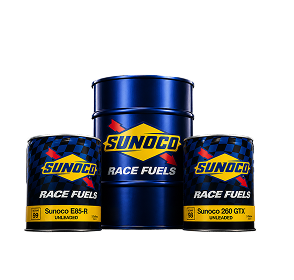
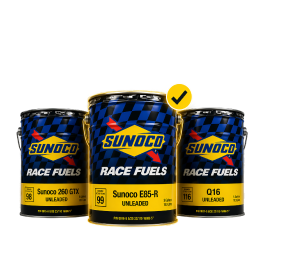
For modern performance vehicles and racing classes that mandate unleaded fuel, Sunoco offers several excellent options. Sunoco 260 GT provides 100 octane in an unleaded formulation that's perfect for street-driven performance cars, track day vehicles, and racing applications where unleaded fuel is required. This fuel works exceptionally well in late-model muscle cars, sport compacts, and European performance vehicles designed for premium pump gas but capable of taking advantage of higher octane.
Sunoco SS 100 offers another 100-octane unleaded option with different chemical characteristics that some engines prefer. The formulation differences between these fuels involve vapor pressure, distillation curves, and specific gravity, all of which can influence how an engine responds. Some tuners find that certain engine combinations produce better throttle response or slightly more power with one formulation versus another, even at the same octane rating.
Sunoco E85-R provides a racing-grade ethanol blend with excellent knock resistance and cooling properties. Ethanol's high heat of vaporization absorbs significant heat during the intake cycle, effectively cooling the intake charge and allowing more aggressive tuning. Many turbocharged applications have switched to E85-based fuels for this reason, accepting the increased fuel consumption in exchange for better detonation resistance and charge cooling.
LEADED RACE FUEL PORTFOLIO
For dedicated race engines where lead isn't restricted, Sunoco's leaded fuel lineup offers maximum performance and flexibility. Sunoco Standard at 110 octane serves as the workhorse fuel for countless racing applications. This purple-dyed fuel has powered winners in circle track racing, drag racing, road racing, and virtually every other motorsport discipline. Its 110 octane rating provides sufficient knock resistance for most naturally aspirated engines up to about 14:1 compression and moderate boost applications.
Sunoco Maximal steps up to 114 octane for more demanding applications. High-compression naturally aspirated engines, aggressive nitrous oxide combinations, and higher-boost forced induction setups benefit from Maximal's additional detonation resistance. The fuel's formulation supports consistent performance across varying atmospheric conditions, an important consideration for racers competing at different elevations or in varying weather.
For the most extreme applications, Sunoco offers fuels ranging up to 118 octane. These ultra-high-octane formulations serve specialized needs like top-tier drag racing, where engine builders push compression ratios and boost levels to absolute limits. Pro Modified drag cars, Pro Stock engines, and other elite-level competition engines require every bit of octane these fuels provide to survive the extreme cylinder pressures they generate.
APPLICATION-SPECIFIC FORMULATIONS
Beyond octane rating, Sunoco formulates fuels for specific racing disciplines. Drag racing fuels emphasize characteristics that support quick acceleration and short-duration, high-intensity use. Circle track fuels are optimized for sustained high-RPM operation over extended periods. Marine racing fuels address the unique demands of watercraft engines, which often run at consistently high loads in challenging cooling environments.
This specialization matters because racing engines face different stresses depending on their application. A drag motor running quarter-mile passes experiences vastly different thermal cycles than an endurance racing engine running for hours. The fuel formulation can be optimized for these distinct use cases, providing advantages in throttle response, power consistency, and engine protection.
DEBUNKING COMMON OCTANE MYTHS
Despite octane's importance in racing, several persistent myths continue to circulate in the paddock and on internet forums. Understanding the truth behind these misconceptions helps racers make better fuel decisions and avoid wasting money on unnecessary upgrades.
HIGHER OCTANE DOESN'T ALWAYS MEAN MORE POWER
A widespread misconception among racers is that higher octane automatically translates to increased horsepower. In reality, octane rating doesn't increase the energy content of fuel. It simply allows the fuel to resist detonation more effectively under pressure and heat. Gasoline contains approximately 114,000 BTU per gallon regardless of octane rating. That energy content remains essentially constant whether you're burning 87 octane pump gas or 118 octane race fuel.
Using a fuel with a higher octane rating than your engine requires won't add horsepower unless your specific setup or tuning demands it. Performance experts emphasize that the power gains come from being able to advance timing or increase boost safely, not from the octane itself. If your engine is already running optimal timing without knock on 100 octane fuel, switching to 110 octane won't magically produce more power. The higher octane fuel simply provides no additional benefit in that scenario.
However, if your engine is knock-limited on lower octane fuel, meaning the tuner has had to retard timing or reduce boost to prevent detonation, then switching to higher octane fuel allows optimization that will produce measurable power gains. The fuel itself isn't more powerful, but it enables the engine to operate in a more efficient state. This distinction is crucial for understanding when octane upgrades make sense and when they're simply wasteful.
TOO MUCH OCTANE WON'T HURT PERFORMANCE
Another common myth suggests that excessive octane can harm engine performance, supposedly by burning too slowly or leaving unburned fuel in the exhaust. This concern is unfounded when using properly formulated race fuels. Sunoco's products are engineered for stability, clean combustion, and predictable burn characteristics, ensuring consistent performance regardless of whether you're running the minimum required octane or a higher rating for added safety margin.
The myth likely originated from misunderstanding how octane affects combustion. Higher octane fuels do resist auto-ignition more effectively, but this doesn't mean they burn more slowly when properly ignited by the spark plug. Modern race fuels are carefully formulated to maintain appropriate burn rates across octane ranges. The flame speed and combustion duration remain suitable for racing engines even at the highest octane ratings.
Some racers report that their engines run better on specific octane levels, preferring 110 over 114, for example. These preferences usually stem from other fuel characteristics beyond octane, such as vapor pressure, specific gravity, or chemical composition differences between formulations. Different base stocks and additive packages can influence throttle response and power delivery in subtle ways that some engines respond to favorably.
RACE FUEL ALWAYS OUTPERFORMS PUMP GAS
While race fuel offers higher octane ratings than pump gas, not every engine needs or benefits from race fuel. Modern pump premium gasoline, typically rated at 91-93 octane AKI, is sufficient for many street performance engines. Vehicles with compression ratios below 11:1 and no forced induction often run perfectly well on premium pump gas, saving significant money over race fuel.
The decision to use race fuel should be based on actual need rather than the assumption that "more is better." If your engine makes more power on race fuel because it allows more aggressive tuning, the investment makes sense. If dyno testing shows no difference between premium pump gas and 100 octane race fuel for your application, you're wasting money on unnecessary octane. Smart racers test their specific combinations to determine the minimum octane required for optimal performance, then add a small safety margin rather than buying the highest octane available regardless of need.
HOW TO SELECT THE RIGHT OCTANE FOR YOUR ENGINE
Choosing the appropriate octane starts with understanding your engine's specific requirements. Several interconnected factors influence the ideal fuel selection, and evaluating them systematically ensures you select fuel that provides adequate protection without unnecessary expense.
KEY VARIABLES TO CONSIDER
Compression Ratio: Static compression ratio serves as the foundational factor in determining octane requirements. Higher compression ratios generate more cylinder pressure and heat, requiring higher octane to prevent detonation. The relationship isn't perfectly linear, as combustion chamber design, piston crown shape, and squish clearance also influence detonation resistance. However, compression ratio provides a useful starting point for fuel selection.
Engines with compression ratios below 10:1 typically run well on premium pump gas (91-93 octane). Ratios from 10:1 to 11:1 may require 93 octane or higher depending on other factors. Once compression reaches 11:1 to 12:1, race fuel in the 100-104 octane range becomes advisable. Above 12:1 compression, most naturally aspirated engines benefit from 108-110 octane, with the highest compression race engines requiring 112-116 octane or more.
Boost Levels: Forced induction dramatically affects octane requirements by effectively raising cylinder pressure. Turbocharged and supercharged engines often require octane ratings from 110 to 118 depending on boost pressure and timing strategies. A useful rule of thumb suggests that every 2-3 psi of boost pressure increases octane requirements by approximately one rating point, though this varies considerably based on intercooler efficiency and base engine compression.
Low-boost applications running 5-8 psi might get by with 100 octane fuel, especially with effective intercooling. Medium boost setups pushing 10-15 psi typically need 110-112 octane. High-boost combinations exceeding 20 psi almost always require 114-116 octane or higher. Extreme boost levels above 30 psi demand the highest octane fuels available and often benefit from supplemental cooling methods like water-methanol injection.
Ignition Timing: Aggressive timing advances increase the likelihood of knock by initiating combustion earlier in the compression stroke when cylinder pressures and temperatures are rising rapidly. Higher octane fuels allow tuners to optimize timing for maximum power while maintaining safe margins. The relationship between timing and octane is direct: if you want to run more timing advance, you need more octane to support it without detonation.
Most engines produce peak torque with ignition timing somewhere between 28 and 36 degrees before top dead center, depending on RPM and load. Achieving these optimal timing values without knock requires matching fuel octane to the engine's physical characteristics. When tuning, professionals typically advance timing gradually while monitoring for knock, then back off 2-3 degrees to establish a safety margin. The octane rating that allows optimal timing without knock indicates the minimum fuel grade required.
Cylinder Temperature and RPM Range: Engines that run hotter or sustain high RPM for extended periods place greater demands on fuel stability, making octane selection even more critical. Drag racing engines might tolerate slightly lower octane because they run for only seconds at a time, never reaching full thermal saturation. Endurance racing engines running at high loads for hours need every bit of octane rating to prevent detonation as temperatures climb.
Combustion chamber temperature influences detonation tendency dramatically. Aluminum cylinder heads with efficient coolant passages run cooler than iron heads, potentially allowing slightly less octane. Conversely, engines with marginal cooling systems or operating in high ambient temperatures need extra octane to compensate for elevated temperatures throughout the induction system and combustion chamber.
Atmospheric Conditions: Air density, temperature, and humidity all affect detonation tendency. Hot, humid days at sea level create the most challenging conditions for preventing knock. The combination of high air density and elevated temperatures increases cylinder pressures and temperatures, demanding higher octane. Conversely, racing at high elevation or in cold weather reduces detonation tendency, sometimes allowing successful operation on lower octane than would be required under more severe conditions.
Professional racing teams often adjust fuel selection based on weather forecasts and track elevation. A combination that runs safely on 110 octane during cool morning qualifying sessions might require 112 or 114 octane for hot afternoon races. Having multiple fuel options available provides flexibility to optimize for varying conditions.
RACING DISCIPLINE CONSIDERATIONS
Sunoco provides detailed fuel recommendations for specific racing disciplines, helping competitors match fuel octane precisely to their build specifications and performance goals. Drag racing fuels emphasize quick throttle response and maximum power for short-duration runs. Road racing fuels prioritize consistency over extended periods and stable performance as fuel temperatures rise.
Circle track racing demands fuels that maintain power output lap after lap under sustained high loads. Marine racing applications benefit from fuels formulated for the unique cooling challenges watercraft engines face. Off-road and motocross fuels must perform reliably across wide-open throttle conditions while resisting vapor lock in hot environments.
Understanding your racing discipline's specific demands helps narrow fuel choices to formulations optimized for those conditions. While octane rating remains the primary specification, these application-specific optimizations can provide real advantages in competitive racing environments.
WORKING WITH PROFESSIONAL TUNERS
Consulting with an experienced tuner or a Sunoco fuel expert ensures you are maximizing both power output and engine safety. Professional tuners have extensive experience matching fuel octane to specific engine combinations and can often predict octane requirements accurately based on an engine's specifications alone. Their dyno testing capabilities allow precise determination of the minimum octane required for optimal performance, eliminating guesswork and preventing both over-spending on unnecessary octane and catastrophic detonation from insufficient octane.
Many professional engine builders maintain detailed records of octane requirements for various combinations they've built, providing valuable baseline data for similar builds. These databases, accumulated over years or decades of experience, represent priceless knowledge that helps racers avoid expensive mistakes and accelerate their tuning processes.
THE SUNOCO DOUBLE DISTILLED™ DIFFERENCE
Quality and consistency separate good race fuel from exceptional race fuel. Many race fuel suppliers source their products from multiple refineries or blend components from various origins, leading to batch-to-batch variations that frustrate tuners seeking consistency. Sunoco takes a fundamentally different approach through their proprietary Double Distilled™ refining process.
This advanced refining method ensures every batch of race fuel maintains exact octane consistency, eliminating the variability that can disrupt tuning or cause frustrating performance inconsistencies. The process involves refining base stocks specifically for racing fuel production rather than simply blending to meet octane specifications from whatever components are available. This additional refinement step removes impurities and inconsistencies that might otherwise affect combustion characteristics.
WHY CONSISTENCY MATTERS
For race teams and tuners pursuing perfection, fuel consistency translates directly into confidence on the track. Research from automotive engineering studies confirms that fuel consistency is just as important as octane rating when it comes to achieving repeatable performance results. An engine tuned to the edge with one batch of fuel might experience detonation with a different batch if the fuel's characteristics vary, even if both batches meet the stated octane specification.
Octane rating alone doesn't tell the complete fuel story. Vapor pressure, distillation curve, specific gravity, and chemical composition all influence how fuel performs in real-world racing conditions. Inconsistency in any of these parameters can cause driveability issues, performance variations, or worse, engine damage when the fuel doesn't behave as expected.
Professional racing teams often purchase fuel by the drum or even by the tanker load, seeking to ensure they use identical fuel throughout a season. This practice minimizes variables and allows tuners to optimize engine calibrations knowing the fuel will perform identically race after race. Sunoco's manufacturing consistency makes this level of precision possible even when purchasing smaller quantities or buying fuel at different tracks throughout a season.
QUALITY CONTROL AND TESTING
Sunoco maintains rigorous quality control standards throughout the production and distribution process. Every batch undergoes extensive testing to verify it meets specifications before shipping to distributors. This testing includes octane verification, specific gravity measurement, vapor pressure testing, and analysis of chemical composition. The company's quality assurance protocols ensure that fuel purchased in California performs identically to fuel purchased in Florida or any other market Sunoco serves.
This commitment to quality extends to packaging and handling as well. Race fuel containers are designed to prevent contamination and minimize evaporation during storage. Proper handling procedures at distributor locations ensure fuel maintains its quality from refinery to racer. These seemingly small details matter when chasing hundredths of a second on the track or trying to maintain consistent performance across a multi-race season.
ADVANCED OCTANE CONSIDERATIONS
Beyond the basics, several advanced factors influence octane requirements and fuel selection for sophisticated racing programs. Understanding these nuances helps experienced racers extract every bit of performance while maintaining reliability.
FUEL TEMPERATURE EFFECTS
Fuel temperature significantly affects both octane requirement and power output. Cooler fuel is denser, allowing more fuel mass to be injected per unit volume. This increased density can produce slightly more power while also potentially increasing detonation tendency due to richer mixtures. Many racing fuel cells now include provisions for fuel cooling, either through heat exchangers or ice-filled insulation, maintaining consistent fuel temperatures throughout competition.
Hot fuel presents the opposite challenges. As fuel temperature rises, it becomes less dense and more prone to vapor formation. Vapor lock in fuel lines can cause lean conditions that increase detonation risk dramatically. Some racing classes have implemented maximum fuel temperature rules to prevent teams from gaining unfair advantages through exotic fuel cooling systems.
NITROUS OXIDE COMBINATIONS
Nitrous oxide systems dramatically increase cylinder pressures and temperatures when activated, substantially raising octane requirements. The oxygen enrichment nitrous provides allows engines to burn more fuel, generating tremendous power increases. However, the additional fuel being burned and the compressed state of the oxygen creates extremely demanding conditions for the fuel.
Small nitrous shots of 50-75 horsepower on naturally aspirated engines might require stepping up from 100 octane to 110 octane. Larger nitrous systems adding 150-250 horsepower often demand 114-116 octane. Extreme nitrous combinations producing 300+ horsepower gains require the highest octane race fuels available, sometimes supplemented with octane-boosting additives or race-grade methanol blends.
METHANOL AND ALCOHOL FUELS
Methanol and ethanol offer extremely high effective octane ratings, with methanol providing knock resistance equivalent to 120+ octane gasoline. These alcohol fuels also provide substantial charge cooling benefits through their high heat of vaporization. However, they require completely different fuel system sizing, as methanol requires approximately twice the volume flow of gasoline to achieve the same air-fuel ratio.
Many racing classes mandate specific fuel types, with some requiring methanol or E85 while others restrict competition to gasoline-based fuels. Understanding the rules for your racing class is essential before investing in fuel system modifications or engine builds optimized for specific fuel types.
MAKING THE RIGHT CHOICE
Selecting the right octane is about more than reading numbers on a label. It requires understanding your engine's architecture, your performance objectives, and the quality of the fuel you trust. With Sunoco Race Fuels' scientifically engineered product range and unmatched batch-to-batch consistency, racers can push their limits knowing their fuel is built to meet the challenge.
The investment in proper race fuel pays dividends in performance, reliability, and peace of mind. Engine damage from detonation can cost thousands of dollars in parts alone, not counting the labor to rebuild or the missed racing opportunities while repairs are completed. Quality race fuel represents inexpensive insurance against these catastrophic failures while enabling the performance you've invested in achieving through your engine build and tuning.
Smart fuel selection also considers practical factors like availability, shelf life, and cost. Purchasing fuel in bulk can reduce per-gallon costs significantly for active racing programs. Proper storage in sealed containers away from heat and sunlight preserves fuel quality between races. Some race fuels include stabilizers that extend shelf life, while others are best used within months of production for optimal performance.
For personalized guidance on selecting the optimal octane rating for your specific engine setup, connect with Sunoco's fuel experts who can help you make informed decisions based on your unique racing application and goals. Their technical support staff includes experienced racers and tuners who understand the real-world demands of competitive motorsports and can provide recommendations tailored to your needs.
Whether you're building your first race engine or optimizing a championship-winning combination, investing time to understand octane selection will pay dividends in performance and reliability. The knowledge you gain helps you communicate more effectively with your tuner, make informed decisions about engine builds, and troubleshoot issues when they arise. In the competitive world of motorsports, every advantage matters, and proper fuel selection provides a foundation for success that you can build upon with smart tuning and skilled driving.