.svg)




100 Octane Gas: What It Is, Who Needs It, and When It Makes Sense
RACING'S NEXT ERA: WHERE PERFORMANCE MEETS RESPONSIBILITY
The motorsports industry is entering a new era. As global attention shifts toward sustainability and cleaner energy, racing is becoming a proving ground for innovation in fuel technology. For decades, Sunoco Race Fuels has been synonymous with performance and precision. Today, that same spirit of engineering excellence is leading the company into the future one where innovation and environmental responsibility work hand in hand.
Motorsports has always pushed the boundaries of what's possible. From aerodynamics to tire technology, every advancement on the track often influences the cars we drive every day. Technologies like turbocharging, direct fuel injection, and advanced engine management systems all found their proving grounds in racing before becoming standard features in consumer vehicles. Now, the same is happening with fuels. With increasing regulations from organizations like the FIA (Fédération Internationale de l'Automobile), consumer demand for greener practices, and manufacturers pledging carbon neutrality, the racing world is embracing the challenge of reimagining fuel chemistry.
Sunoco is at the forefront of this shift, combining decades of technical expertise with a vision for sustainability that never compromises on performance. As the official fuel supplier to more than 60 racing series worldwide, including NASCAR, NHRA, and IndyCar, Sunoco occupies a unique position to drive meaningful change across all levels of motorsports competition.
THE CHANGING LANDSCAPE OF MOTORSPORTS ENERGY
For years, the conversation in motorsports revolved around speed, power, and precision. But in today's world, energy efficiency and environmental responsibility are equally vital to the conversation. Racing organizations and sanctioning bodies are setting ambitious new goals to reduce carbon emissions without sacrificing the performance that makes motorsports compelling. Formula 1, for instance, has committed to achieving net-zero carbon by 2030 and using 100% sustainable fuels by 2026. IMSA has pledged to run on 100% renewable racing fuel, and IndyCar continues to advance its ethanol-based fuel program toward greater sustainability.
This shift has made race fuel innovation more important than ever. As the official fuel supplier to many premier racing series, Sunoco plays a unique role in shaping this transformation. The company's scientists and engineers work not only to optimize performance on the track but also to ensure that new fuel formulations align with future energy goals while maintaining the batch-to-batch consistency that professional racing demands. Each development in racing fuels becomes part of a larger movement toward more efficient, cleaner combustion, paving the way for technologies that may one day power both race cars and road cars alike.
The environmental challenge facing motorsports isn't just about reducing emissions; it's about demonstrating that high performance and sustainability can coexist. When millions of racing fans see sustainable fuels powering championship-winning cars, it builds public confidence that these technologies can work in everyday applications. This visibility makes racing a powerful platform for driving acceptance of sustainable energy solutions across the broader automotive industry.
THE EVOLUTION OF RACE FUELS: FROM LEADED TO NEXT-GENERATION FORMULATIONS
The story of race fuel evolution mirrors the story of motorsports itself: constant innovation in pursuit of performance. Decades ago, leaded fuels dominated the track, prized for their ability to prevent knocking and support higher compression ratios. Tetraethyl lead additives provided valve seat protection and octane enhancement that enabled engines to produce more power safely. When regulations began phasing out lead due to environmental and health concerns starting in the 1970s and accelerating through the 1990s, fuel suppliers faced an enormous challenge.
SUNOCO'S INNOVATION IN UNLEADED FORMULATIONS
Sunoco's response was not to simply adapt but to lead. Through advanced refining techniques, carefully selected hydrocarbon components, and meticulous testing with professional race teams, the company developed high-octane unleaded fuels that could perform at the same elite level as their leaded predecessors. Products like Sunoco 260 GTX demonstrated that unleaded formulations could deliver the detonation resistance, stability, and power consistency that racers demanded.
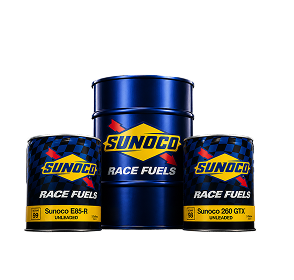
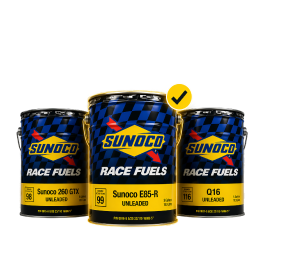
Each new generation of Sunoco fuels brought improvements in detonation resistance, chemical purity, and power consistency. Over time, oxygenated blends and cleaner-burning components entered the picture, enhancing both efficiency and emissions profiles. Fuels like Sunoco E85-R showcased how renewable ethanol could not only match gasoline-based performance but actually exceed it in many applications, with octane ratings approaching 113 and superior cooling properties that enabled higher boost pressures in forced-induction engines.
THE NEXT LEAP FORWARD
Today, the industry stands on the edge of another leap forward. The introduction of renewable and synthetic components is reshaping the landscape once again. Instead of fossil-derived hydrocarbons extracted from petroleum, future fuels may come from recycled carbon, biomass sources, or synthetic processes that combine captured CO2 with renewable hydrogen. Sunoco's investment in research and development ensures that as these new materials emerge, they're engineered with the same precision and reliability racers have trusted for generations.
For more on how ethanol has transformed racing performance, see our comprehensive guide on understanding ethanol blends in racing fuels.
SUSTAINABILITY WITHOUT SACRIFICING PERFORMANCE
A common misconception about sustainable fuels is that they can't deliver the same performance as traditional ones. In racing, where every fraction of a second counts and championships are won by the smallest margins, that assumption doesn't hold up under scrutiny. Sunoco's approach to sustainability starts with the principle that performance is non-negotiable. Every new formulation must meet or exceed the standards expected by professional racers across the world, from drag strips to road courses to oval tracks.
Through advanced chemistry and engineering, Sunoco creates fuels that maintain horsepower, throttle response, and efficiency even when incorporating renewable or lower-carbon components. This balance is achieved through meticulous control over purity, molecular structure, volatility characteristics, and additive technology. Modern race fuels are designed to burn cleaner without compromising the combustion characteristics that translate into power and reliability.
SCIENTIFIC VALIDATION OF PERFORMANCE
Properly formulated sustainable fuels can actually improve certain performance metrics compared to conventional fuels. Higher oxygen content in ethanol-based fuels, for example, promotes more complete combustion and provides charge cooling that increases air density, both factors that contribute to greater power output.
Several of Sunoco's current products already reflect this balance between performance and environmental responsibility. E85-R and E30-R are formulated with renewable ethanol content while maintaining the power output, consistency, and detonation resistance that define competitive motorsports. Each blend represents the culmination of years of data collection, extensive dyno testing, real-world racing validation, and feedback from championship-winning race teams who trust Sunoco to deliver excellence at every turn of the track.
The key is understanding that "sustainable" doesn't mean "compromised." It means engineered differently, with careful attention to how renewable components interact with engine systems and how they perform under the extreme temperatures, pressures, and load variations that racing imposes. Learn more about the performance advantages of oxygenated formulations in our article on why highly oxygenated fuels deliver more horsepower.
BIO-BASED AND SYNTHETIC FUELS: THE SCIENCE BEHIND THE SHIFT
One of the most exciting developments in the racing world is the rise of bio-based and synthetic fuels. These next-generation energy sources are redefining what's possible in high-performance applications and represent the future of motorsports fueling.
BIO-BASED FUELS
Bio-based fuels are derived from renewable feedstocks like ethanol, isobutanol, renewable naphtha, or other plant-derived materials. They can significantly reduce the carbon footprint of racing while offering comparable, or even improved combustion properties compared to traditional petroleum-based fuels. According to the U.S. Department of Energy, advanced biofuels produced from cellulosic biomass or agricultural waste can reduce greenhouse gas emissions by up to 90% compared to conventional gasoline.
The advantage of bio-based fuels lies in their carbon cycle. Rather than releasing carbon that's been sequestered underground for millions of years (as fossil fuels do), bio-based fuels utilize carbon that was recently captured from the atmosphere by growing plants. This creates a closed loop where carbon is continuously recycled rather than accumulating in the atmosphere.
Sunoco's experience with ethanol-based race fuels like E85-R has provided valuable insights into how renewable components perform in racing applications. The company has developed proprietary blending techniques and stabilizer packages that address ethanol's hygroscopic nature (its tendency to absorb water) while maximizing its performance benefits. These formulations maintain consistency and stability far superior to pump E85, which can vary from 51% to 85% ethanol content depending on season and location.
SYNTHETIC FUELS (E-FUELS)
Synthetic fuels, meanwhile, represent an entirely new frontier in sustainable racing technology. They're created by combining captured carbon dioxide with hydrogen produced from renewable energy sources like wind or solar power. The result is a drop-in fuel that's chemically similar to conventional gasoline but produced in a way that recycles carbon rather than releasing new emissions into the atmosphere. This technology has the potential to make motorsports nearly carbon-neutral while preserving the internal combustion engines, the visceral sound, and the mechanical complexity that define the sport's appeal.
Major automotive manufacturers including Porsche, Audi, and Ferrari are investing billions in synthetic fuel technology, recognizing its potential to decarbonize both racing and road vehicles. Porsche's partnership with Siemens Energy to build an e-fuel production facility in Chile specifically targets motorsports as an early application, demonstrating the technology's viability in demanding performance environments.
DROP-IN COMPATIBILITY
The beauty of synthetic fuels lies in their compatibility with existing engine technology. They can be formulated to match the properties of current race fuels octane rating, energy density, and volatility, meaning teams don't need to redesign fuel systems, change engine components, or develop entirely new tuning strategies. This "drop-in" compatibility makes the transition to sustainable fuels far more practical and economically viable across all levels of racing.
SUNOCO'S EXPERTISE IN NEXT-GENERATION FORMULATIONS
Sunoco's refining expertise and decades of race fuel chemistry experience are critical in this shift toward sustainable fuels. Producing consistent, high-quality race fuels requires a level of precision that few suppliers can achieve. The difference between a fuel that wins championships and one that causes engine damage can come down to parts-per-million variations in chemical composition or subtle differences in volatility characteristics.
The company's ongoing research ensures that bio-based and synthetic fuels meet the same stringent standards of stability, purity, and performance that define its legacy products like Standard 110 and Optima. As these fuels continue to advance and production methods mature, Sunoco remains committed to being at the forefront of innovation while maintaining the performance standards that have made it the trusted choice of professional racers worldwide.
THE ROLE OF ETHANOL AND OXYGENATES IN TOMORROW'S RACE FUELS
Ethanol has long been a staple of sustainable fuel development, and its importance in racing continues to grow as production methods become increasingly sustainable and technology improves. As a renewable alcohol derived from plant materials including corn, sugarcane, cellulosic biomass, and agricultural waste, ethanol offers both environmental and performance benefits that make it ideal for racing applications.
PERFORMANCE AND ENVIRONMENTAL BENEFITS
Its natural oxygen content (approximately 35% by weight) helps engines burn cleaner by promoting more complete combustion, while its high heat of vaporization creates a charge cooling effect that enhances power and efficiency in high-performance engines. This cooling can reduce intake temperatures by 30-50°F in turbocharged applications, allowing engines to make more power safely while running higher boost pressures.
However, ethanol's hygroscopic nature and its tendency to absorb water from the atmosphere can create storage and handling challenges that make pump E85 unsuitable for racing. Sunoco addresses these issues through precise blending, carefully selected hydrocarbon base stocks, and the use of proprietary stabilizing additives that maintain fuel integrity over time. The result is a reliable, consistent ethanol-based fuel that delivers predictable results even under extreme racing conditions and after extended storage periods.
SUNOCO'S ADVANCED ETHANOL FORMULATIONS
Products like E85-R maintain precisely 85% ethanol content year-round, unlike variable pump E85. This consistency allows tuners to optimize engine calibrations with confidence, knowing the fuel will perform identically whether purchased in January or July, in Florida or California. E30-R provides a balanced option for racers who want ethanol's performance benefits with less dramatic fuel system requirements, making sustainable fuel performance accessible to a broader range of competitors.
Oxygenated fuels, which include ethanol and other oxygen-bearing compounds, are also becoming increasingly important in motorsports' sustainability initiatives. They not only improve combustion efficiency but also help reduce harmful emissions like carbon monoxide and unburned hydrocarbons.
Sunoco's advanced ethanol blends are engineered with racing performance in mind, unlike many variable-quality pump alternatives. These fuels deliver the same responsiveness, power output, and reliability racers expect while supporting the global move toward renewable energy sources.
COLLABORATING FOR THE FUTURE: SUNOCO'S ROLE IN ADVANCING MOTORSPORT SUSTAINABILITY
Sustainability in motorsports is not a solitary effort. It's a collaboration across manufacturers, teams, sanctioning bodies, and fuel suppliers working toward shared goals. Sunoco works closely with partners across the industry to test and refine new fuel formulations that align with both regulatory requirements and the uncompromising performance standards that professional racing demands.
REAL-WORLD TESTING AND VALIDATION
These partnerships allow Sunoco to conduct controlled testing in professional racing environments, gathering critical real-world data on power output, engine wear patterns, emissions profiles, and batch-to-batch consistency. By working directly with championship-winning teams and technical organizations, Sunoco helps ensure that sustainable fuels meet the rigorous demands of competition while supporting broader carbon-reduction goals set by racing series and sanctioning bodies.
The company's collaborations extend to engine manufacturers and race car builders who provide insights into how new fuel formulations interact with modern engine management systems, fuel injection technology, and combustion chamber designs. This feedback loop is invaluable for optimizing fuel performance and ensuring compatibility across diverse racing applications.
LONG-TERM RESEARCH COMMITMENT
In addition to active racing partnerships, Sunoco invests heavily in long-term research programs focused on renewable components, alternative feedstocks, advanced refining methods, and synthetic fuel production. Each project contributes to a larger mission: to deliver the highest-performing, most reliable fuels while advancing the sustainability of motorsports for generations to come.
This collaborative approach ensures that the transition to sustainable racing fuels happens smoothly, with input from all stakeholders and validation under the most demanding conditions possible. When sustainable fuels succeed in professional racing where margins are razor-thin and performance cannot be compromised, it proves their viability for broader automotive applications.
STORAGE, SAFETY, AND RELIABILITY IN NEXT-GEN FUELS
As fuel formulations evolve to incorporate renewable and synthetic components, so do the requirements for safe handling, storage, and distribution. Bio-based and synthetic fuels often have unique chemical properties that demand specialized attention to maintain quality and performance characteristics over time.
STABILITY AND QUALITY CONTROL
Sunoco leads the way in developing products with superior stability and long shelf life, even when renewable components are part of the blend. The company's proprietary additive packages and stabilizer systems resist oxidation, prevent gum and varnish formation, and maintain octane quality throughout the fuel's usable life. This is particularly important for seasonal racing where fuel may be stored for months between competition periods.
Maintaining fuel integrity is crucial, especially in racing, where precision is everything and even minor variations in fuel quality can affect performance or cause engine damage. Sunoco's quality control processes include advanced filtration to remove particulates and contaminants, rigorous testing of every batch before it leaves the facility, and specialized packaging that ensures the product racers receive performs exactly as intended.
TECHNICAL GUIDANCE AND SUPPORT
The company also provides comprehensive technical guidance and best practices to help teams adapt to new fuel technologies safely and effectively. This includes recommendations for storage conditions, container specifications, handling procedures, and fuel system compatibility checks. For ethanol-based fuels, Sunoco advises on moisture prevention strategies and material compatibility to ensure all fuel-wetted components can handle ethanol exposure without degradation.
By maintaining an unwavering focus on safety, reliability, and performance, Sunoco ensures that every fuel, whether traditional or next-generation, meets the same high standards that have defined its reputation for decades. This commitment gives racers confidence that sustainable fuels will perform as predictably and safely as the conventional fuels they've relied on throughout their careers.
BEYOND THE TRACK: HOW RACE FUEL INNOVATION IMPACTS EVERYDAY DRIVING
The connection between motorsports and consumer automotive technology has always been strong, with innovations tested in racing's crucible eventually influencing the vehicles millions of people drive daily. Many of the advancements first tested on the track eventually influence the fuels we use on the road. Innovations in combustion efficiency, oxygenation strategies, and chemical purity that begin in race fuel laboratories often find their way into commercial gasoline formulations months or years later.
THE RACING-TO-ROAD PIPELINE
Racing provides the most demanding test environment possible for fuel technology. Engines running at high RPM under maximum load for extended periods experience stresses far beyond normal driving conditions. If a fuel performs reliably in these extreme circumstances, it will certainly handle the comparatively mild demands of street use. This validation gives fuel producers and automakers confidence to invest in new technologies for consumer applications.
As the automotive industry transitions toward a cleaner energy future with increasingly stringent emissions regulations and corporate commitments to carbon neutrality the lessons learned in racing will be more valuable than ever. The precision blending techniques, renewable sourcing strategies, and performance optimization approaches behind sustainable race fuels could become key to achieving lower emissions and higher efficiency in everyday driving without sacrificing the performance and reliability consumers expect.
INNOVATION WITH PURPOSE
For Sunoco, racing is not just about competition. It's about innovation with real-world applications. Every breakthrough on the track is an opportunity to create better technology for all drivers. By pushing the limits of what fuel can do in the world's most demanding environments, Sunoco is helping shape the next chapter in global energy evolution, demonstrating that sustainable fuels can deliver the performance modern engines require.
THE ROAD AHEAD FOR SUNOCO RACE FUELS
Sunoco's legacy has always been built on precision, performance, and relentless innovation. As the motorsports industry continues to evolve toward greater sustainability, the company remains committed to advancing the science of fuel technology while never compromising on the performance standards that have made it the choice of champions. The road ahead is defined by balance: achieving elite performance while meeting the world's growing demand for environmental responsibility.
COMPREHENSIVE PRODUCT PORTFOLIO
With ongoing research initiatives, collaborative partnerships across the motorsports industry, and a steadfast dedication to excellence, Sunoco is helping define what the future of racing fuels looks like. Whether through renewable formulations like E85-R, synthetic fuel development, or cleaner combustion chemistry in products like Optima, the company's mission remains the same to power champions with the most advanced fuels on the planet.
The company's extensive portfolio already includes fuels optimized for every racing discipline and engine type. From Standard 110 for high-compression applications to 260 GTX for versatile performance, Sunoco has demonstrated its ability to engineer fuels that meet diverse needs while maintaining the consistency and quality that professional racing demands. This same engineering expertise now drives the development of sustainable fuels that will power the next generation of racing.
A NEW CHAPTER BEGINS
The evolution of racing fuels is far from over. In fact, it's just beginning a new chapter, one where innovation, responsibility, and performance come together seamlessly. And at the center of that story is Sunoco Race Fuels, leading the charge toward a faster, cleaner, and more sustainable future for motorsports while honoring the tradition of excellence that has defined racing for generations.