.svg)


How to Tell If Your Car Needs More Octane: Signs, Symptoms, and When to Upgrade Your Fuel
From the editors of
What to Evaluate Before Selecting a Race Fuel
How do you select the proper fuel for your application? This decision tree of sorts can also help narrow down the choices.
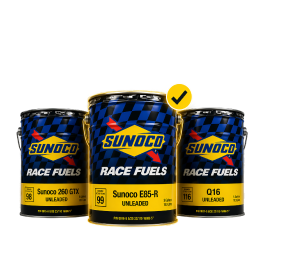
Race or Street: If the fuel needs to be street-legal, then the recommendation from Zachary J. Santner, senior specialist of quality at Sunoco, is to go with either pump fuel or Sunoco’s 100-octane 260 GT (or, for those living in California, their SS 100 instead). These street fuels can be mixed, he adds, so a 1:1 mix of 93-octane pump fuel and 100-octane 260 GT would yield 96 octane. For most track day enthusiasts, 93 octane is probably good enough, adds Fred McConnell, who is director of marketing for Sunoco and a racer himself.
Leaded or Not: Leaded fuels are not compatible with catalytic converters and oxygen sensors. Unleaded fuels will be limited to 104 octane.
Oxygenated or Not: Sunoco’s oxygenated fuels contain alcohol, and that alcohol helps performance. Alcohol can have some drawbacks, though: Proper storage becomes key when you’re talking about fuels containing alcohol. Alcohol is also such an effective cleaner that it could loosen deposits in older, dirtier systems and clog the fuel filter.
Displacement and Compression Ratio: “Octane numbers relate to how much heat and pressure a fuel can handle before autoignition,” Santner says. However, he cautions, you can’t simply pair an octane number with a compression ratio, as other factors must be considered. For example, piston diameter also must be considered: bigger pistons can require more octane because the flame front has to travel further, he explains.
Redline: A fuel’s aromatic content should also be considered. Fuels with a low specific gravity – 0.700 to 0.720 – have a low aromatic content and will burn faster. When would you want a faster-burning fuel? With very high engine speeds, for example.
However, a higher specific gravity doesn’t always mean a slower burn rate. Alcohol-blended fuels burn quickly despite a specific gravity of around 0.791. When getting to this point of the decision tree, Santner adds, you might want to discuss the particulars with your engine builder and fuel supplier.
Related reading: Choosing the Best Fuel for Drag Racing