
.svg)




The Science Behind Oxygenated Race Fuels
Fuel plays a larger role in motorcycle racing than many realize. It influences engine performance, responsiveness, cooling efficiency, and overall reliability. In competitive environments where every fraction of a second counts, choosing the right fuel can directly affect results. Race fuels aren't just about high octane, they're engineered for stability at high RPMs, precise combustion, and consistent energy delivery under stress.
Unlike pump gas, which is formulated with cost, emissions, and seasonal adjustments in mind, race fuels are built for performance. They offer tighter control over chemical composition, cleaner burn characteristics, and higher resistance to knock, which is critical for high-compression engines. These attributes help reduce variability, simplify tuning, and support more aggressive engine setups.
For motorcycles, especially those used in racing or high-performance applications, selecting a purpose-built fuel is a fundamental part of setup. It ensures the engine runs at peak efficiency, minimizes wear from inconsistent combustion, and maintains output across a wide range of operating conditions. Whether you're dialing in a 2-stroke for motocross or a high-compression 4-stroke for road racing, fuel selection is one of the most important choices you'll make.
WHY STANDARD PUMP FUELS DON'T MEASURE UP
Most riders are familiar with the convenience of pump fuel, but what works for everyday commuting doesn't always hold up under racing conditions. Standard gasoline is engineered for cost-efficiency, emissions compliance, and wide usability, not for the specific needs of a high-performance motorcycle engine operating at full load and maximum RPM.
One of the major limitations is octane variability. While a fuel might be labeled as 91 or 93 octane at the pump, the actual stability and knock resistance can fluctuate due to seasonal formulation changes and regional blending requirements. Inconsistent fuel chemistry introduces unpredictability, which can make precise engine tuning difficult. For engines that rely on tight tolerances and high compression, that inconsistency can translate to lost power or increased risk of detonation.
Oxygen content is another factor. Pump fuels are oxygenated primarily to meet environmental regulations, not to enhance performance. The amount and type of oxygenates can vary, affecting the air/fuel ratio and combustion efficiency. Additionally, street fuels often include additives that can leave deposits or degrade over time, especially in high-heat or long-storage scenarios.
Ultimately, the needs of a racing engine are fundamentally different. It demands fuel that burns cleanly, resists detonation reliably, and remains stable in extreme conditions. While pump fuels are accessible and suitable for general use, they aren't optimized for the kind of performance racing requires.
THE SCIENCE BEHIND HIGH-PERFORMANCE RACING FUELS
Racing fuels differ from standard gasoline in more than just octane numbers. They're formulated with a specific goal in mind: to provide stable, efficient combustion under extreme operating conditions. This means they're built from a foundation of chemistry that supports high engine loads, fast burn characteristics, and precise air/fuel management.
One of the most critical elements in race fuel design is the octane rating, which measures a fuel's resistance to knock or pre-ignition. High-compression and high-RPM motorcycle engines generate intense heat and pressure in the combustion chamber. If the fuel combusts prematurely, it can lead to engine damage or degraded performance. Higher-octane fuels resist that premature ignition, allowing more aggressive timing and compression strategies.
Oxygenation is another key aspect. Adding oxygen-bearing compounds to the fuel helps increase the amount of energy released during combustion. More oxygen means the engine can burn more fuel, and that translates to more power. However, highly oxygenated fuels require tuning adjustments; more fuel volume must be delivered to maintain a proper air/fuel ratio. Without those adjustments, an engine can run too lean.
Stability also matters. Racing fuels are designed to maintain consistent properties over time, even when stored for weeks or months. This is particularly important in powersports applications, where fuel might sit between race events or during off-seasons. By contrast, many pump fuels degrade more quickly, especially those with higher ethanol content.
Taken together, these attributes make race fuels a technical tool as much as a consumable. They provide a foundation for safe, repeatable power and enable engines to run at the limits of their mechanical design without compromise.
SPOTLIGHT: MOTO RP6 FOR HIGH-RPM APPLICATIONS
For high-revving engines used in motorcycle racing, fuel selection is especially critical. Moto RP6 is an example of a fuel engineered specifically for these environments. It's a highly oxygenated, unleaded race fuel designed to support the demands of both 2-stroke and 4-stroke engines commonly found in motocross, road racing, and other powersports disciplines.
What sets Moto RP6 apart is its heat absorption and stability. As the fuel evaporates during the intake process, it pulls heat from the surrounding environment, a characteristic known as latent heat of vaporization. This helps reduce intake temperatures and supports cooler, denser air/fuel mixtures, which are beneficial for power and consistency. That cooling effect also helps maintain engine reliability during prolonged high-RPM use.
The fuel's thermal stability is another critical factor. In racing conditions, engines cycle through extreme temperature swings, and fuels that break down or oxidize can leave deposits or lose performance. Moto RP6 is formulated to resist these changes, maintaining its integrity without requiring refrigeration or complex storage protocols. It's also compatible with custom 2-stroke oil mixtures, offering flexibility for different engine setups.
For riders and teams tuning for high-output scenarios, Moto RP6 offers a clean burn, strong oxygen content, and reliable repeatability. That means fewer variables to chase on the dyno or track, and more focus on riding and results.
ADDITIONAL MOTORCYCLE FUEL OPTIONS
While Moto RP6 suits many high-RPM applications, it's just one of several specialized fuels available for motorcycle racing. Depending on engine configuration, class regulations, and tuning goals, other formulations may offer a better fit.
EXO2 is a highly oxygenated fuel developed for environments where rules limit engine modifications but allow flexibility in fuel choice. Its high oxygen content can help produce more power in restricted engine classes, such as those with crate engines or two-barrel carburetors. However, the elevated oxygen level requires richer air/fuel mixtures, which may demand carburetor or fuel injection recalibration to avoid running lean.
260 GT Plus is an unleaded, oxygenated fuel intended for off-road and racing applications. With an octane rating of 104 and a formulation that includes MMT (a metal-based octane booster), this fuel supports engines with advanced timing or elevated boost levels. It's especially useful for riders looking to push performance without switching to leaded fuels.
260 GT is another option tailored to riders who need a high-performance, street-legal fuel. It offers 100 octane and is compatible with modern emissions systems, making it suitable for dual-purpose motorcycles, track day bikes, or street builds with performance upgrades. It's also safe for use with both 2-stroke and 4-stroke engines.
These fuels provide distinct advantages depending on use case. Selecting the right one means considering compression ratio, engine architecture, and how the motorcycle will be used, whether it's for sanctioned racing, recreational track time, or high-performance street riding.
HOW TO SELECT THE RIGHT RACING FUEL FOR YOUR MOTORCYCLE
Choosing the right fuel starts with understanding your engine's mechanical setup and performance goals. The wrong fuel won't just leave power on the table, it can also create tuning challenges or even damage internal components over time. Selecting the optimal blend requires a clear look at several factors.
First, consider the engine type. Two-stroke and four-stroke engines have different fueling needs. Two-strokes rely on pre-mixed oil, so compatibility with your chosen lubricant is essential. Four-strokes, on the other hand, may benefit more from fuels with higher oxygen content and octane, especially if they're tuned for high compression or forced induction.
Compression ratio is another key factor. Higher compression increases thermal efficiency, but it also raises the risk of knock. To prevent that, engines with compression ratios above 12:1 often need a fuel with a higher octane rating. Using fuel with too low of an octane rating can lead to detonation, which shortens engine life and compromises performance.
Intended use also shapes the decision. Fuels for short-course motocross might emphasize rapid throttle response and mid-range torque, while endurance racing setups could prioritize thermal stability and long burn consistency. Riders who store fuel between events may want a formulation with better oxidation resistance and longer shelf life.
Tuning is the final piece. Highly oxygenated fuels require richer air/fuel mixtures and, often, ignition adjustments. If your setup includes programmable ECU or aftermarket carburetors, make sure the system can accommodate those changes. When in doubt, consulting with a race fuel supplier or engine tuner can help match fuel specs to your build and riding environment.
PERFORMANCE, RELIABILITY, AND SHELF LIFE CONSIDERATIONS
High-performance motorcycle fuels are built not just for speed, but also for consistency and longevity. Riders and tuners often focus on horsepower numbers, but fuel chemistry also plays a major role in how reliably an engine performs over time, and how well it responds to storage and transport.
One of the clearest advantages of race-grade fuels is how cleanly they burn. Compared to pump gas, they tend to produce fewer carbon deposits, which helps prevent buildup on valves, piston crowns, and spark plugs. This can be especially important for high-RPM engines that rely on precise combustion timing and airflow. Fewer deposits mean more predictable tuning, reduced maintenance, and better long-term performance.
Cooler combustion temperatures are another benefit. Fuels with high latent heat of vaporization, like those with oxygenates, can absorb more heat during evaporation. This cooling effect helps lower intake air temperatures and, in turn, reduces the thermal load on engine components. The result is steadier performance across race distances and improved engine durability.
Shelf life is also worth considering. Some high-octane or oxygenated fuels can degrade quickly if stored improperly, especially in environments with heat or exposure to air. However, many race fuels are engineered with stabilizers and oxidation inhibitors to extend their usability. Proper storage, in sealed, opaque containers kept at stable temperatures, can keep most race fuels viable for a year or more. In some cases, stability may exceed two years if conditions are ideal.
When fuel is consistent from batch to batch, racers don't have to retune or troubleshoot between events. That predictability can be just as important as peak power, especially in competitive environments where every variable counts.
CONCLUSION: RIDE WITH CONFIDENCE USING THE RIGHT MOTORCYCLE RACING FUEL
For riders chasing performance, the choice of fuel is as critical as any mechanical component. It influences how an engine responds, how reliably it runs under stress, and how much power can be safely extracted through tuning. Whether you're preparing for a national motocross series, building a track-only superbike, or simply pushing your setup to its limits on the weekend, the right fuel offers both performance gains and peace of mind.
Specialized fuels for motorcycles are formulated to do more than resist knock, they burn cleaner, offer better heat management, and maintain their chemistry over time. That consistency means fewer tuning surprises, lower maintenance demands, and more predictable behavior lap after lap. Riders benefit from fuels that are matched to the specific needs of their engines, whether those needs involve compression, RPM, or race regulations.
Choosing a high-quality fuel isn't just about octane numbers. It's about understanding your machine, how it's built, and what it's built to do. When those factors align with the right fuel, performance becomes more repeatable, tuning gets easier, and the engine can operate at its full potential.
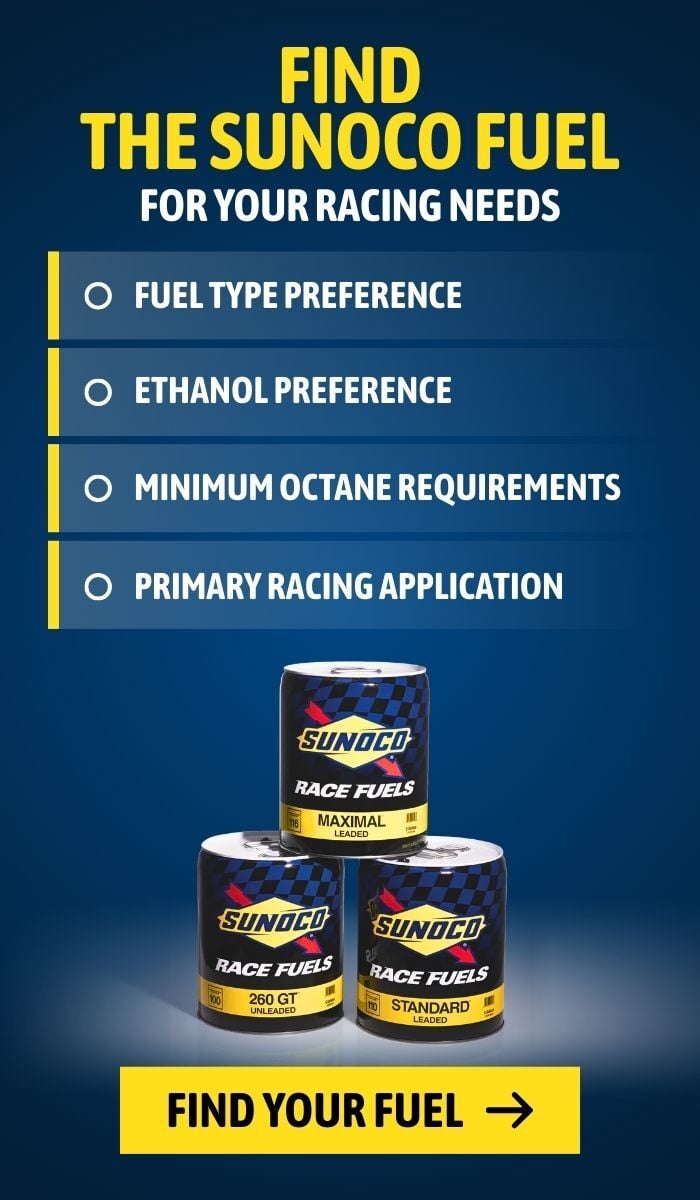
If you're serious about racing or high-output riding, fuel should never be an afterthought. It's a foundational part of your setup, and a choice that directly affects results. For more information on selecting the right racing fuel for your motorcycle, visit Sunoco Race Fuels or use their fuel selector tool to find the perfect match for your application.