.svg)



Does Higher Octane Fuel Last Longer?
THE ETHANOL DILEMMA FOR CLASSIC AND HIGH-PERFORMANCE ENGINES
Ethanol has become a common component of modern pump gasoline, but its presence is far from ideal for older vehicles and high-compression racing engines. What looks like an efficient fuel blend on paper often creates problems once it reaches the tank of a classic car or a performance engine tuned for precision. Racers, restorers, and enthusiasts are finding that ethanol can quietly undo years of careful engineering and maintenance.
The core issue lies in ethanol's chemistry. It is hygroscopic, which means it draws moisture from the surrounding air. That moisture eventually makes its way into the fuel system, where it can separate from the gasoline and cause corrosion. In storage conditions, even a few months can be enough for phase separation to occur, leaving behind a fuel mixture that no longer burns as intended. Carburetors, injectors, and fuel tanks then bear the cost of this instability in the form of rust, residue, and clogged passages.
Ethanol also shortens the shelf life of gasoline. A collector vehicle that spends much of its time in storage is at risk of running poorly or failing to start altogether if the fuel has degraded. Rubber seals and gaskets, which were never designed to withstand alcohol-based blends, can swell, crack, or deteriorate after prolonged exposure. For anyone maintaining a valuable classic or relying on maximum performance from a tuned engine, these are not minor inconveniences but real threats to reliability and longevity.
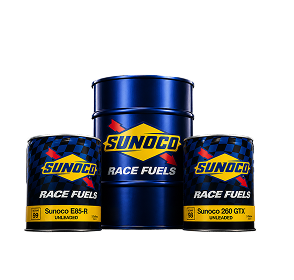
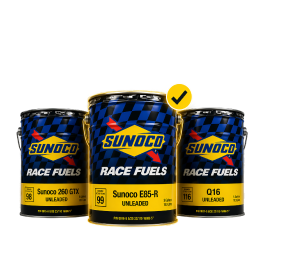
This is where ethanol-free fuels stand apart. By removing ethanol from the equation, fuels like Sunoco Surge, Standard, and Supreme provide stability in storage, protection for sensitive components, and consistent combustion characteristics that tuners and engine builders can rely on. These fuels are engineered with racing demands in mind, but their benefits extend to vintage cars and motorcycles that need to remain in top condition over years of use and careful preservation.
HOW ETHANOL BLENDS AFFECT FUEL SYSTEM MATERIALS AND LONG-TERM STORAGE
Ethanol was introduced into fuel primarily as an oxygenate to help reduce emissions and support renewable energy policies. In practice, this addition has introduced significant challenges for engines designed before ethanol blends became the standard. One of the most immediate concerns is how ethanol interacts with the materials found in classic and performance fuel systems.
Older vehicles often rely on carburetors, steel fuel tanks, and rubber fuel lines. Ethanol is a solvent that accelerates the breakdown of varnish and deposits inside fuel passages. While this might sound beneficial, the loosened debris often ends up clogging jets and filters. Over time, ethanol also attacks rubber seals, gaskets, and diaphragms, causing them to swell, soften, or crack. Replacement parts for classic cars are often costly or difficult to source, and ethanol exposure accelerates the cycle of repair and replacement.
Storage magnifies these issues. Because ethanol attracts water from the atmosphere, long-term storage almost guarantees that moisture will enter the system. This moisture promotes corrosion in tanks and fuel rails, leading to pitting and rust that compromise performance and safety. Once water content reaches a certain threshold, phase separation occurs: the ethanol and water sink to the bottom of the tank while the gasoline floats above. Engines that draw from the lower portion of the tank end up burning a corrosive, low-octane mixture that was never intended for performance applications.
The volatility of ethanol blends also shortens their shelf life compared to non-ethanol fuels. A vehicle stored through the winter or a race car parked between seasons may struggle to start when the time comes to return to service. Degraded ethanol-blended gasoline often leaves behind gummy deposits and varnish that require additional cleaning before the engine can run properly. For classic car owners and racers who prize consistency, the unpredictable nature of ethanol fuels creates unnecessary risk and maintenance overhead.
Non-ethanol fuels eliminate these vulnerabilities. Without alcohol content to attract water or destabilize in storage, they provide a stable foundation for both long-term preservation and peak engine performance.
RISKS OF CORROSION, PHASE SEPARATION, AND PERFORMANCE LOSS
The problems introduced by ethanol-blended gasoline are not theoretical. They translate into measurable risks that can shorten engine life, increase maintenance costs, and degrade performance when it matters most. Corrosion is one of the most visible outcomes. Once moisture bonds with ethanol inside the tank, acids begin to form. These acids attack metal components such as tanks, fuel rails, and carburetor bowls. In classic cars where original parts are irreplaceable, the damage is not only expensive but often permanent.
Phase separation represents another critical failure point. When ethanol and water separate from the gasoline, the result is a two-layered fuel mixture. Engines drawing from the lower layer encounter a diluted solution that burns unpredictably, often with significantly reduced octane. A performance engine tuned for precise combustion is extremely vulnerable in this situation. Detonation, pre-ignition, and poor throttle response are common outcomes when phase separation has occurred.
Performance loss does not always come in sudden failures. More often, it appears gradually as deposits accumulate, seals degrade, and tuning becomes harder to maintain. Racers may notice inconsistent lap times, while classic car owners encounter hesitation, rough idling, or harder cold starts. These issues erode confidence in the engine's reliability. For engines operating at high RPM or under heavy load, ethanol-blend instability can be the difference between a clean run and a costly rebuild.
By contrast, non-ethanol fuels avoid these cascading risks. Their stability ensures that stored fuel maintains its original properties, their hydrocarbon-only formulation prevents water absorption, and their predictable octane delivery gives tuners and engine builders confidence that performance will not change from one start to the next.
WHY MANY ENGINES PERFORM BETTER ON NON-ETHANOL FUELS
Engines require stability in every element of the combustion process. Air, fuel, spark, and compression must all remain consistent to deliver reliable performance. When ethanol is part of the fuel blend, consistency is often lost. Ethanol absorbs moisture, breaks down over time, and its percentage can vary from pump to pump. For high-performance engines, that variability makes precise tuning difficult and reduces power output.
Non-ethanol fuels eliminate that uncertainty. Without alcohol in the mix, combustion characteristics remain steady. Octane ratings do not drift, burn rates remain uniform, and the chemical makeup of the fuel does not change during storage. In engines that operate under high cylinder pressures, such as those with high compression ratios or forced induction, this reliability helps protect against knock and detonation.
Moisture control is another major benefit. Ethanol naturally attracts water from the air, and that water lowers the energy content of the fuel. It also disrupts the air-to-fuel ratio needed for clean combustion. Ethanol-free fuels avoid this problem, which means more consistent cylinder pressures and better power delivery.
Classic vehicles also see significant advantages. Carbureted systems are easily fouled by the residue ethanol leaves behind, but ethanol-free fuels keep jets, passages, and intake valves cleaner. Owners notice smoother throttle response, quicker starts after storage, and fewer idle issues. Over time, these benefits reduce the maintenance burden and extend the life of delicate components.
The performance gains are not only about horsepower but about trust. With non-ethanol fuels, both classic and modern engines deliver results that can be repeated day after day, race after race.
ETHANOL'S TENDENCY TO ATTRACT MOISTURE AND DEGRADE FUEL SYSTEMS
One of the most well-documented drawbacks of ethanol in gasoline is its ability to absorb water from the surrounding air. This trait, known as hygroscopicity, introduces problems as soon as fuel enters a tank or storage container. Unlike pure hydrocarbon fuels, ethanol does not remain chemically isolated. Instead, it seeks out and bonds with moisture in the atmosphere, slowly pulling it into the fuel mixture.
As water content builds, several issues emerge. The first is corrosion. Metals commonly found in fuel tanks, carburetor bowls, and fuel rails are highly vulnerable once exposed to the ethanol-water blend. Rust, pitting, and internal surface wear reduce the integrity of these components. For classic vehicles that rely on original tanks and carburetors, such damage can be irreversible.
The second issue is fuel instability. When water levels reach a certain threshold, ethanol and water separate from the gasoline, a process called phase separation. Engines pulling fuel from the bottom of the tank then receive a diluted, corrosive mixture with significantly reduced octane. This not only weakens performance but also increases the risk of detonation, which can destroy pistons and bearings in high-performance engines.
Ethanol's affinity for moisture also creates long-term degradation in rubber and plastic fuel system components. Seals, hoses, and diaphragms were never designed for prolonged contact with alcohol-based blends. Over time, they swell, harden, or crack, which leads to fuel leaks and unsafe operating conditions. Replacing these parts repeatedly becomes both costly and inconvenient for owners.
Ethanol-free fuels eliminate this risk. By avoiding alcohol entirely, they remain chemically stable, resist water absorption, and protect both metal and rubber components. This is why non-ethanol race fuels are so often recommended for long-term storage and for engines where reliability is paramount.
STABILITY, RELIABILITY, AND PROTECTION BENEFITS OF ETHANOL-FREE FORMULATIONS
The strongest argument for ethanol-free fuels is stability. Unlike ethanol blends that can degrade in a matter of months, non-ethanol fuels retain their original properties for extended periods. This makes them especially valuable for vehicles that sit in storage between uses. A classic muscle car parked for the winter or a race engine prepared weeks before an event can be started with confidence when non-ethanol fuel is in the tank. There is no need to worry about varnish buildup, water contamination, or a loss of octane during storage.
Reliability is equally important. Every time an engine is started, the driver expects it to respond the same way. Pump fuels with varying ethanol content make that expectation difficult to meet. By contrast, fuels blended without ethanol are chemically identical from batch to batch. This gives tuners, engine builders, and racers the consistency they need to fine-tune ignition timing, air-fuel ratios, and compression settings. Engines can be pushed harder without the risk of unpredictable combustion caused by ethanol instability.
Ethanol-free fuels also provide critical protection to engine components. Modern performance engines and vintage vehicles both rely on materials that degrade when exposed to alcohol. Ethanol accelerates the breakdown of rubber hoses, gaskets, and seals. It also promotes corrosion in metal tanks and carburetors. Non-ethanol fuels prevent these chemical reactions, extending the life of parts that are often costly or difficult to replace. For restorers and racers alike, avoiding ethanol reduces maintenance cycles and preserves mechanical integrity.
The combined effect of stability, reliability, and protection is peace of mind. Racers know that performance will not change from one heat to the next. Classic car owners know that their investment is protected while their vehicle is in storage. Across both groups, ethanol-free formulations deliver the confidence that fuel will never be the weak link in an engine's performance chain.
SUNOCO SURGE: THE NON-ETHANOL SOLUTION FOR RACING AND CLASSIC CARS
Sunoco Surge was designed to solve the very problems that ethanol-blended fuels create. It is a non-ethanol racing fuel formulated with highly refined hydrocarbons to ensure clean combustion and consistent performance. Unlike standard pump gasoline, Surge contains no alcohol content, which eliminates the risks of water absorption, phase separation, and material degradation. For racers, restorers, and collectors, this means fewer variables to manage and more time spent focusing on performance.
One of Surge's defining qualities is its responsiveness. The formulation allows for quick cold starts and rapid throttle reaction, even in engines that demand large amounts of air and fuel at high speeds. This makes it a favored choice in drag racing and truck pulling, where explosive power delivery is critical. Riders in dirt bike and snowmobile applications also benefit from Surge's stability, particularly in colder climates where ethanol blends tend to perform poorly.
Classic cars and vintage motorcycles see unique advantages as well. Because Surge does not introduce the corrosive effects associated with ethanol, it preserves fuel tanks, carburetors, and lines that may be decades old. For restorers and owners who want their engines to fire up reliably after months in storage, Surge offers a dependable solution. Its light yellow color also makes it easier to distinguish when mixing with two-stroke oil, reducing the chance of confusion in multi-application garages.
Consistency is at the core of Sunoco's engineering philosophy, and Surge is no exception. Every batch is produced under strict laboratory controls, giving builders and racers confidence that the fuel in their tank will perform exactly as expected. The result is a product that delivers across multiple applications, from high-horsepower competition engines to cherished classics that demand careful preservation.
APPLICATIONS FOR DRAG RACING, TRUCK PULLING, DIRT BIKES, SNOWMOBILES, AND VINTAGE ENGINES
Sunoco Surge is versatile because it was engineered to address the needs of very different performance environments while still maintaining reliability. In drag racing, engines are subjected to extreme cylinder pressures and rapid transitions from idle to full throttle. Surge supports these conditions by delivering clean combustion and a fast burn profile that minimizes hesitation. Racers benefit from predictable launches and consistent elapsed times without worrying about ethanol-induced detonation.
Truck pulling presents another demanding scenario. Large displacement engines often operate with oversized intake runners that can make cold starts difficult. Surge's non-ethanol formulation is designed to ignite quickly and provide strong throttle response, which helps competitors build torque early and sustain it throughout a pull. This reliability is especially valuable in competitive environments where a single misfire can mean the difference between winning and falling short.
Two-stroke and four-stroke powersports machines also benefit from Surge. Dirt bikes and snowmobiles require fuels that remain stable in a wide range of temperatures. Ethanol blends can absorb moisture and cause inconsistent performance in cold weather, but Surge avoids these pitfalls. Riders experience cleaner throttle transitions and fewer storage-related issues when their machines sit between riding seasons. The light yellow dye makes Surge easier to identify when premixing two-stroke oil, ensuring that riders can prepare their fuel with confidence.
For vintage cars and motorcycles, the advantages are just as clear. Many classics were built long before ethanol blends became widespread. Their carburetors, seals, and tanks were never designed for alcohol exposure, and sourcing replacement parts can be difficult or expensive. Surge eliminates the chemical stress on these older components, allowing restorers and enthusiasts to protect original equipment while enjoying smooth and reliable performance.
Across all these applications, the common thread is consistency. Surge provides the same combustion quality every time, regardless of climate, storage duration, or engine type. That consistency is what makes it a trusted non-ethanol solution across racing and preservation communities alike.
SUNOCO STANDARD AND SUPREME: HIGH-PERFORMANCE NON-ETHANOL FUELS
While Surge is tailored for quick starts and versatility, Sunoco Standard and Supreme represent the backbone of high-performance non-ethanol fuels. Both are blended for engines that demand consistent octane delivery, clean combustion, and reliable performance under heavy load. They provide racers and builders with trusted options when ethanol-free operation is a requirement.
Sunoco Standard is widely used across motorsports because of its balanced formulation. With a high octane rating and no alcohol content, it performs reliably in small block V8 engines as well as in turbocharged and supercharged setups that require stable detonation control. Its additive package enhances shelf life, making it a strong choice for teams that purchase fuel in bulk or store vehicles between events. Standard is also favored in mild nitrous applications, where predictable combustion is critical to engine safety.
Sunoco Supreme is blended for competition engines that operate at high revolutions per minute. The fuel's fast burn characteristics make it especially effective in bracket racing, where small variations in power can change results. Supreme is highly resistant to vapor lock, ensuring that fuel delivery remains consistent even under hot track conditions. In addition to its reputation among drag racers, Supreme is also trusted in two-stroke applications, where throttle response and stability across the RPM range are vital.
Both fuels are ethanol-free, which gives them an advantage over pump gasoline and ethanol blends when it comes to component protection. Carburetors, seals, and tanks are shielded from the corrosive and moisture-related issues associated with ethanol, allowing racers and restorers to extend the life of their equipment. At the same time, these fuels deliver the repeatability needed for precise tuning. For competitive teams and hobbyists alike, Standard and Supreme provide a stable foundation for performance.
Together with Surge, these fuels illustrate how Sunoco has engineered a comprehensive lineup of non-ethanol options. Each product is tailored to a specific set of needs, but all share the same qualities of stability, reliability, and protection that define Sunoco's approach to race fuel.
STORAGE AND LONGEVITY BENEFITS OF NON-ETHANOL RACE FUELS
One of the most significant advantages of non-ethanol fuels is their ability to remain stable over time. Ethanol-blended gasoline typically begins to break down within a few months, especially if exposed to humidity and temperature swings. This creates problems for both racers and classic car owners, since few engines are run every day. By contrast, non-ethanol fuels like Sunoco Surge, Standard, and Supreme retain their properties for much longer. Properly stored in sealed containers, they can maintain performance characteristics for a year or more without the need for stabilizing additives.
Shelf life is not only a matter of convenience but also a factor in reliability. A collector vehicle that sits in storage for an entire season must be able to start without hesitation. If ethanol-blended fuel has degraded, the car may require carburetor cleaning, injector flushing, or tank draining before it can be driven again. Non-ethanol fuels avoid these problems by resisting oxidation and preventing gum or varnish formation. This reduces the risk of clogged fuel passages and ensures engines are ready to run when the owner turns the key.
Storage also matters for competitive teams that purchase fuel in containers ahead of a racing season. The last thing a crew wants is to discover that fuel consistency has changed midway through an event calendar. Because non-ethanol race fuels are chemically stable, teams can count on the same burn characteristics from the first race to the last. This predictability reduces the need for constant re-tuning and allows engineers to trust the data gathered during testing.
For both classic preservation and high-performance racing, the longevity of non-ethanol fuels translates into cost savings as well. Reduced maintenance, fewer part replacements, and less wasted fuel all add up over time. Just as importantly, owners and teams can focus their attention on performance improvements rather than correcting issues caused by unstable fuel.
FIND ETHANOL-FREE FUEL NEAR YOU
For those looking to make the switch to ethanol-free fuel, finding a reliable source is easier than ever. The Pure-Gas.org website maintains the most comprehensive database of ethanol-free gas stations across the United States and Canada. This resource allows users to search by location and find nearby stations offering pure gasoline.
Additionally, many enthusiasts recommend using the Pure Gas mobile app, which provides real-time location services to find the nearest ethanol-free fuel while on the road. This is particularly valuable for classic car owners on touring events or racers traveling to different tracks.
CONCLUSION: PROTECT AND POWER YOUR ENGINE WITH SUNOCO NON-ETHANOL OPTIONS
Ethanol may dominate today's pump gasoline, but its drawbacks are clear for classic cars and high-performance engines. Moisture absorption, corrosion, phase separation, and shortened shelf life all work against the precision and reliability that enthusiasts and racers demand. Non-ethanol fuels eliminate those risks by offering a stable, consistent, and protective alternative.
Sunoco's lineup of ethanol-free options, including Surge, Standard, and Supreme, provides solutions for a wide range of applications. From drag racing and truck pulling to vintage restorations and weekend cruising, these fuels deliver clean combustion, reliable starts, and long-term protection for valuable components. Their stability in storage ensures that engines are ready to run when it counts, without the maintenance headaches that come with ethanol blends.
For those who take pride in performance and preservation, choosing the right fuel is as important as choosing the right parts. Sunoco's non-ethanol race fuels are engineered to keep engines performing at their peak while protecting them from the hidden costs of ethanol exposure. The result is confidence—on the starting line, on the backroads, or in the garage.
Ready to experience the difference? Find a Sunoco race fuel dealer near you and discover why racers and enthusiasts trust Sunoco for consistent, reliable performance.