Leaded Race Fuel
For High-Compression Engines

High-compression racing engines generate combustion pressures that push past what unleaded fuel can handle. Sunoco leaded race fuels deliver the octane ratings, valve seat protection, and batch-to-batch consistency that serious race engines depend on.


What Is Leaded Race Fuel?

Leaded race fuel contains tetraethyl lead, a chemical compound added to the fuel blend to increase octane rating and provide lubrication for engine valve seats. Lead was removed from street gasoline decades ago, but it remains legal and widely used in sanctioned racing because of the performance and protection benefits it provides in specific engine applications.

The lead in race fuel serves two distinct purposes. The first is octane enhancement. Lead is an effective knock suppressant that allows fuel blenders to reach octane ratings that would be difficult or expensive to achieve through hydrocarbon chemistry alone. The second is valve seat lubrication. Older engines and many purpose-built race engines use hardened steel valve seats that rely on lead deposits for protection against wear. Running unleaded fuel in those engines accelerates seat recession and shortens engine life.

Sunoco leaded race fuels span from 106 to 118 octane and cover a wide range of racing applications, from circle track and drag racing to road course, karting, and truck and tractor pulling.
Porsche Race Car with Sunoco Sign in Background

Sunoco Leaded Race Fuel Lineup

The leaded race fuel lineup covers 106 to 118 octane, with each product engineered for a specific performance range and application. Find the right match for your engine below.
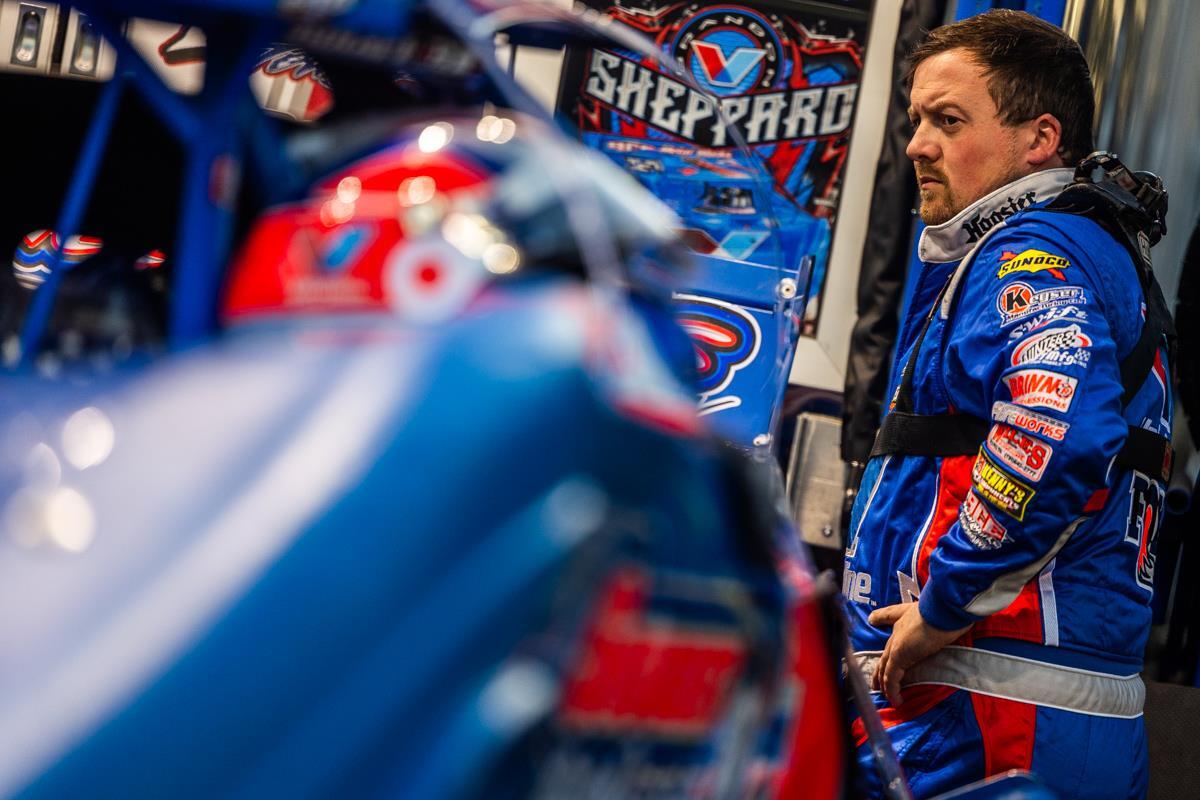
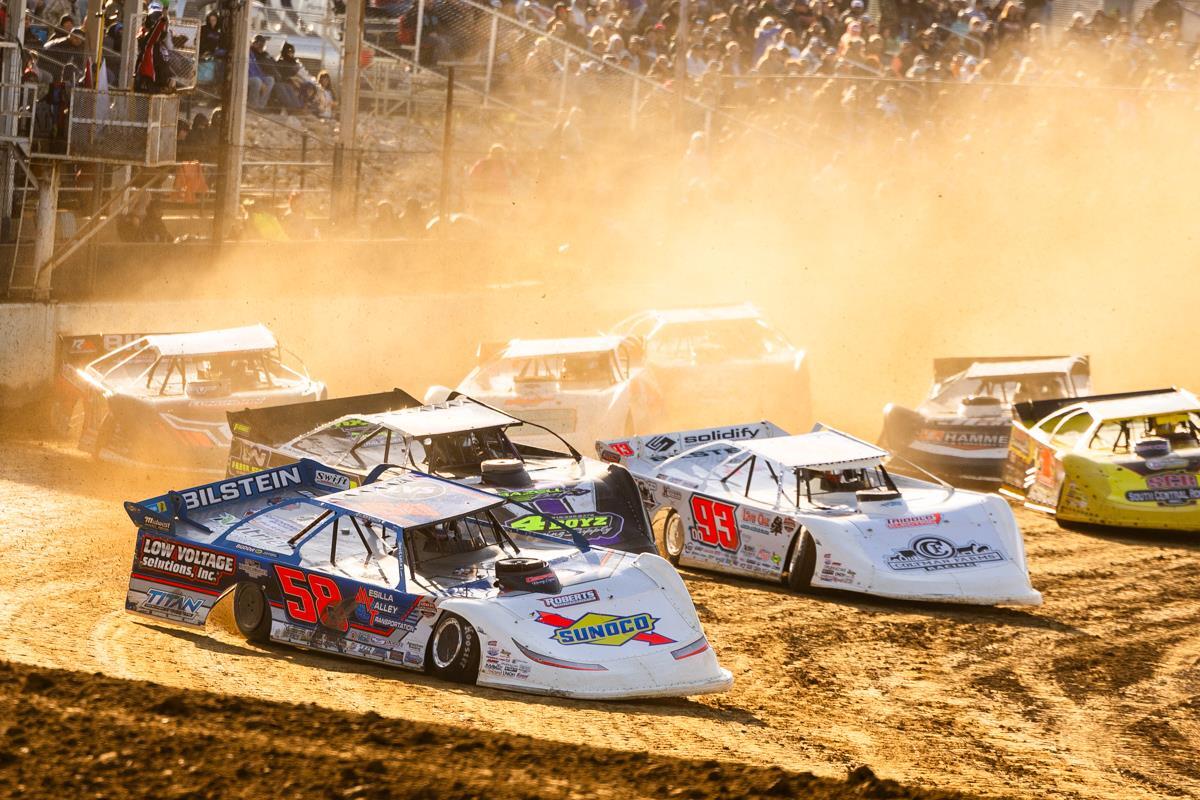
Sunoco Late Model Race Car

Who Needs Leaded Race Fuel?

Leaded race fuel is required or preferred in three main categories of engines.

High-Compression Race Engines Engines built with compression ratios that push beyond the octane ceiling of unleaded race fuel need leaded fuel to prevent detonation. Sprint cars, late model dirt engines, top fuel-adjacent applications, and high-output naturally aspirated drag motors regularly require 112 to 118 octane leaded fuel to operate safely at peak tune.

Vintage and Muscle Car Engines Engines built before unleaded fuel became standard were designed with soft iron valve seats that depend on lead for lubrication. Running unleaded fuel in these engines causes valve seat recession over time. Leaded race fuel maintains proper valve seat protection and provides the octane ratings many high-compression vintage engines require.

Forced Induction and Nitrous Applications Supercharged, turbocharged, and nitrous-assisted engines generate sudden spikes in cylinder pressure that demand high octane protection. Many of these builds rely on leaded fuel not just for octane but for the chemical stability leaded blends provide under extreme combustion events.
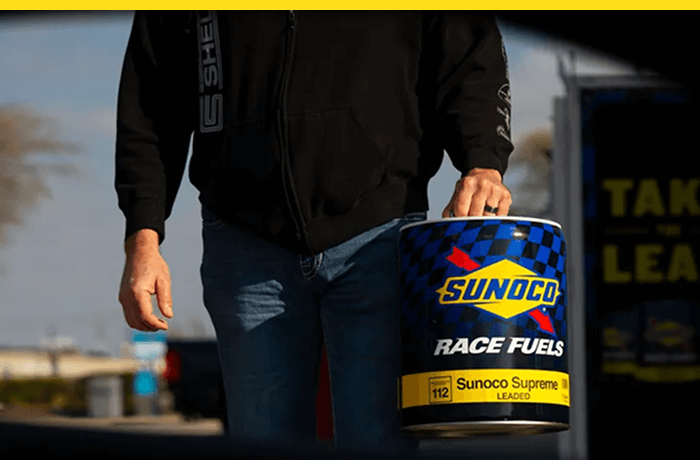
Leaded vs. Unleaded
Race Fuel

Choosing between leaded and unleaded depends on your engine, sanctioning body, and application.

  • Leaded fuels reach higher octane ratings more efficiently, which is why the top of the Sunoco lineup at 114 to 118 octane is leaded

  • Unleaded is required in any application with oxygen sensors, catalytic converters, or emissions equipment

  • For engines without emissions equipment designed around leaded fuel, leaded remains the better-protected option as lead provides valve seat lubrication unleaded blends cannot replicate

When in doubt, the Sunoco fuel selector narrows the field based on your specific application.

Storage and Handling

Leaded race fuel holds its performance characteristics well over time when stored properly.

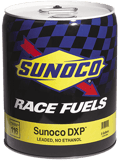
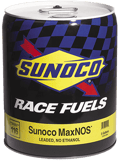
  • DXP, MaxNOS, and HCR Plus carry shelf lives of three years or more

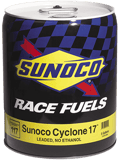
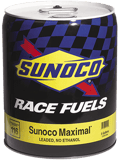
  • SR18, Supreme, Standard, Maximal, and Cyclone 17 hold two years or more

  • Store in sealed, opaque containers away from sunlight and temperature extremes

  • Minimize headspace in containers to slow oxidation between events
  • Fuel stored for extended periods benefits from mixing before use as lead can settle over time

Drag Racing
Performance Tuning Tips

Drag racing tuning focuses on maximizing power output during peak acceleration while maintaining engine safety under extreme loads. Unlike circle track or road racing, drag engines operate at or near maximum output for the entire pass.

  • Ignition timing: Higher octane enables more aggressive timing for increased power without detonation
  • Air-fuel ratios: Drag racing often requires richer mixtures for maximum power and thermal protection
  • Boost control: Consistent fuel quality allows precise boost tuning without safety margins for fuel variations
  • Launch consistency: Repeatable fuel performance translates directly to consistent 60-foot times and ETs

Fuel Storage and Handling
for Drag Racers

Drag racing fuel management requires attention to detail, especially for teams running multiple classes or testing different combinations. Race fuel should be stored in sealed, labeled containers away from heat and direct sunlight.

  • Label containers with fuel type, octane rating, and date purchased
  • Use dedicated containers for each fuel type to prevent cross-contamination
  • Store fuel in climate-controlled environments when possible
  • Keep containers sealed between uses to prevent moisture absorption
  • Transport fuel in approved containers meeting safety regulations
  • For alcohol-based fuels, ensure all storage materials are alcohol-compatible

Drag Racing
Fuel Solutions

From bracket racing to pro-level competition, explore fuels engineered for maximum power, consistent combustion, and the demands of full-throttle acceleration.

High Octane
Race Fuels

Explore how Sunoco's leaded lineup fits into the broader high octane picture and find the right octane level for your compression ratio and build.
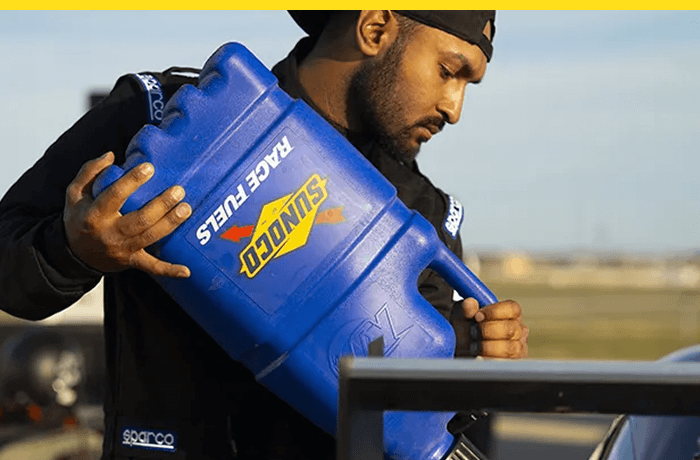
The Double Distilled™
Advantage

Discover how Sunoco's Double Distilled™ process delivers the purity and batch-to-batch consistency that high-compression builds depend on.

Dirt Track Racing Fuels

From sprint cars to late models, discover fuels built for traction, throttle response, and lap-after-lap consistency on clay and dirt surfaces.

Powersports Racing Fuels

Maximize off-road performance with fuels engineered for motocross, UTVs, and high-RPM powersports applications. 

Leaded Race Fuel Frequently Asked Questions

Is leaded race fuel legal?

Leaded race fuel is legal for off-road and sanctioned racing use. It is not street legal and cannot be used in vehicles driven on public roads. Always verify your sanctioning body's fuel rules before selecting a leaded fuel for competition.

Leaded race fuel is compatible with standard rubber fuel lines, carburetors, and mechanical fuel systems found in most race applications. It will damage oxygen sensors and catalytic converters, so it should not be used in any engine equipped with emissions equipment.

Mixing leaded and unleaded race fuels is possible and some builders do it to target a specific octane between available options. The resulting blend will carry lead content proportional to the mix ratio. Keep in mind that any lead content will still damage oxygen sensors and emissions equipment, so mixed blends carry the same restrictions as full leaded fuel.


At 116 octane, for example, DXP, Maximal, and MaxNOS each have different application strengths. DXP and MaxNOS are optimized for boosted and nitrous applications and offer longer shelf life. Maximal covers a broader range of disciplines. The Sunoco fuel selector accounts for these differences and returns a matched recommendation based on your engine type and application.

Leaded fuel should be handled with the same care as any race fuel. Avoid skin contact and use gloves when fueling. Do not use leaded race fuel in enclosed areas without proper ventilation. Store in sealed containers away from heat sources, and keep fuel away from children and pets.

Sunoco leaded race fuels are available through authorized distributors, track suppliers, and specialty fuel retailers nationwide. Use the Sunoco fuel finder to locate the nearest dealer carrying the specific fuel you need.

Related Blog Articles

Learn More About Leaded Fuel

Leaded vs. Unleaded Race Fuels: What You Need to Know

Leaded vs. Unleaded Race Fuels: What You Need to Know

Explore the differences between leaded and unleaded race fuels. Learn how each affects performance, tuning, engine life, and racing regulations.
Street to Strip: Choosing the Right Fuel for Track Days

Street to Strip: Choosing the Right Fuel for Track Days

Learn how to choose the right fuel for street and strip use, from octane basics to ethanol blends and Sunoco race fuel options.
Racing Fuels 101: Why Leaded Fuels Still Matter

Racing Fuels 101: Why Leaded Fuels Still Matter

Learn why lead is used in racing fuels, how it boosts octane, and when leaded vs. unleaded fuel is right for your performance engine.

Find Your Leaded Race Fuel

From weekly circle track programs to professional motorsports competition, Sunoco has a leaded fuel engineered for your application. Whether you are protecting a vintage engine or pushing a high-compression build to its limits, the right fuel choice starts here.